Busan Travel Guide 2026: Beaches, Food & Best Areas to Visit
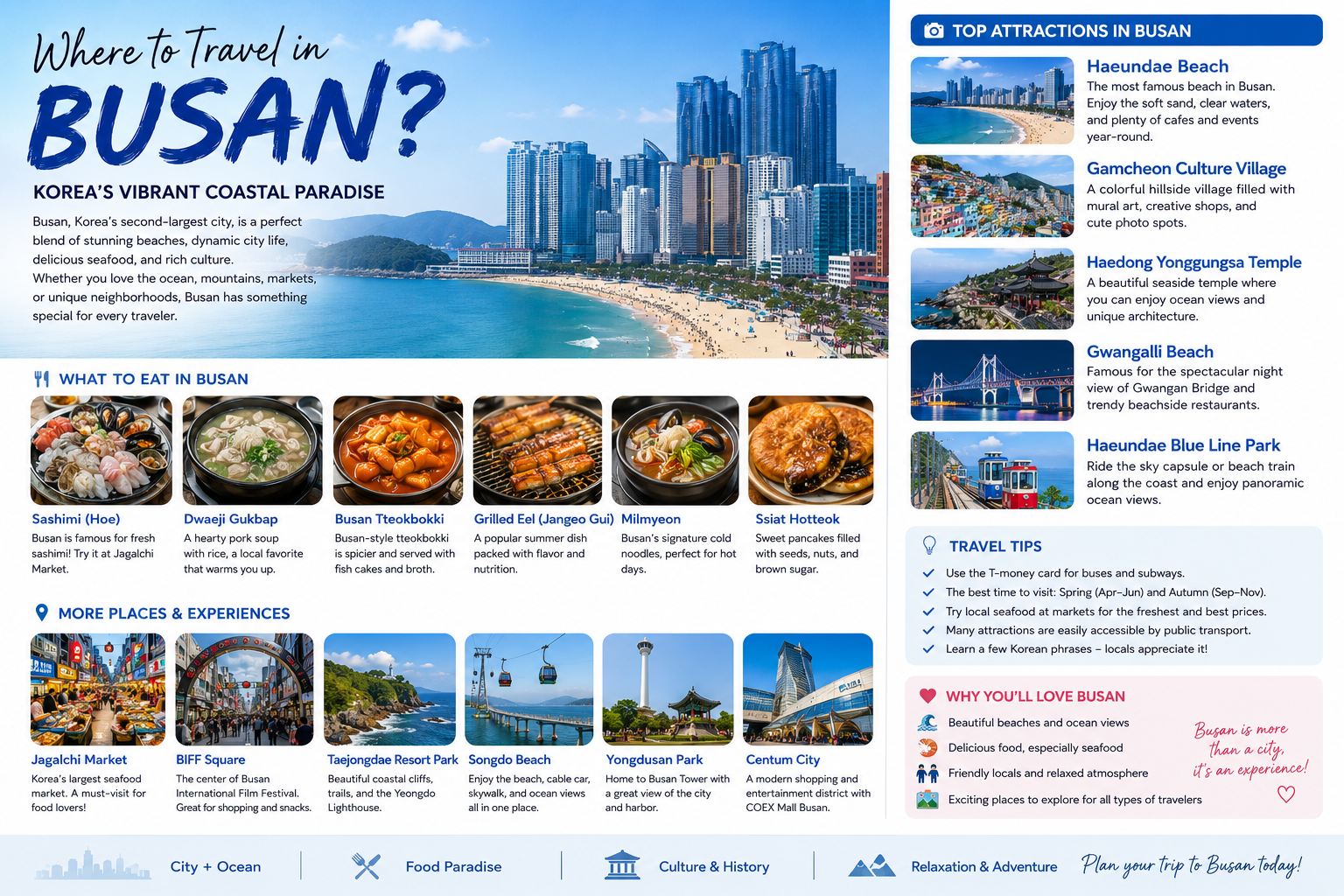
If Seoul is Korea’s fast-moving capital, Busan is the city where Korea slows down and meets the sea.
South Korea’s second-largest city is famous for beaches, seafood markets, colorful hillside villages, coastal temples, cafés, mountain views and some of the country’s best night scenery. The nice thing about Busan is that it does not feel like one single city: Haeundae feels modern and polished, Nampo-dong feels older and more local, Gwangalli comes alive at night, and places such as Gamcheon and Haedong Yonggungsa show completely different sides of Korea.
If this is your first trip to Busan, here are the places, food and neighborhoods I would put at the top of the list.
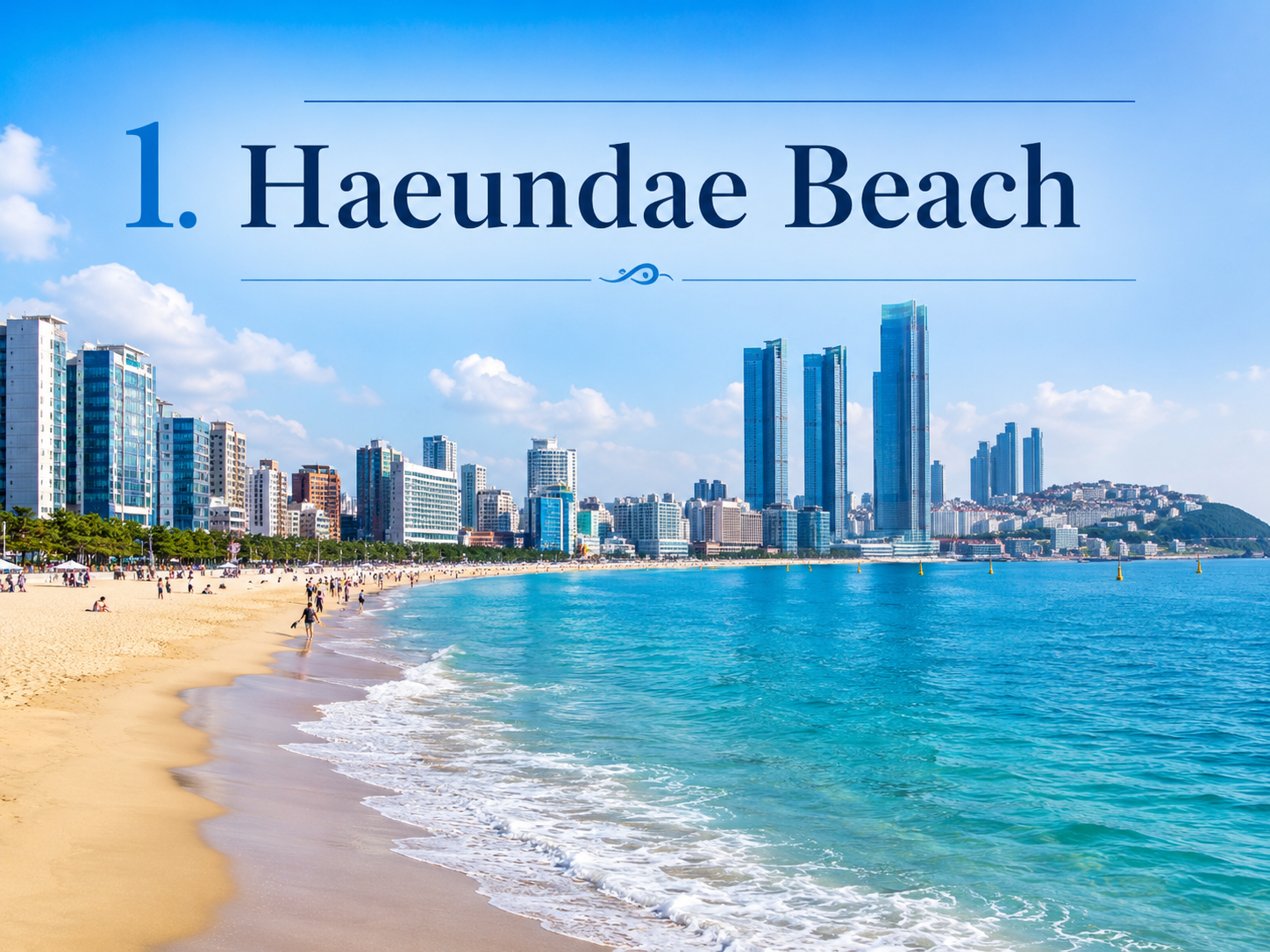
1. Haeundae Beach — Start With Busan’s Most Famous Coast
For most first-time visitors, Haeundae Beach is the easiest introduction to Busan.
It is Busan’s best-known beach, with roughly 1.5 km of sand, and the surrounding area is packed with hotels, cafés, restaurants and attractions.
During the day, walk along the beach and Dongbaekseom area. In the evening, the nearby Marine City skyline creates a completely different atmosphere.
Haeundae is also a convenient place to stay if you want an ocean-view trip rather than a traditional downtown experience.
Best for: first-time visitors, couples, beach lovers, luxury hotels
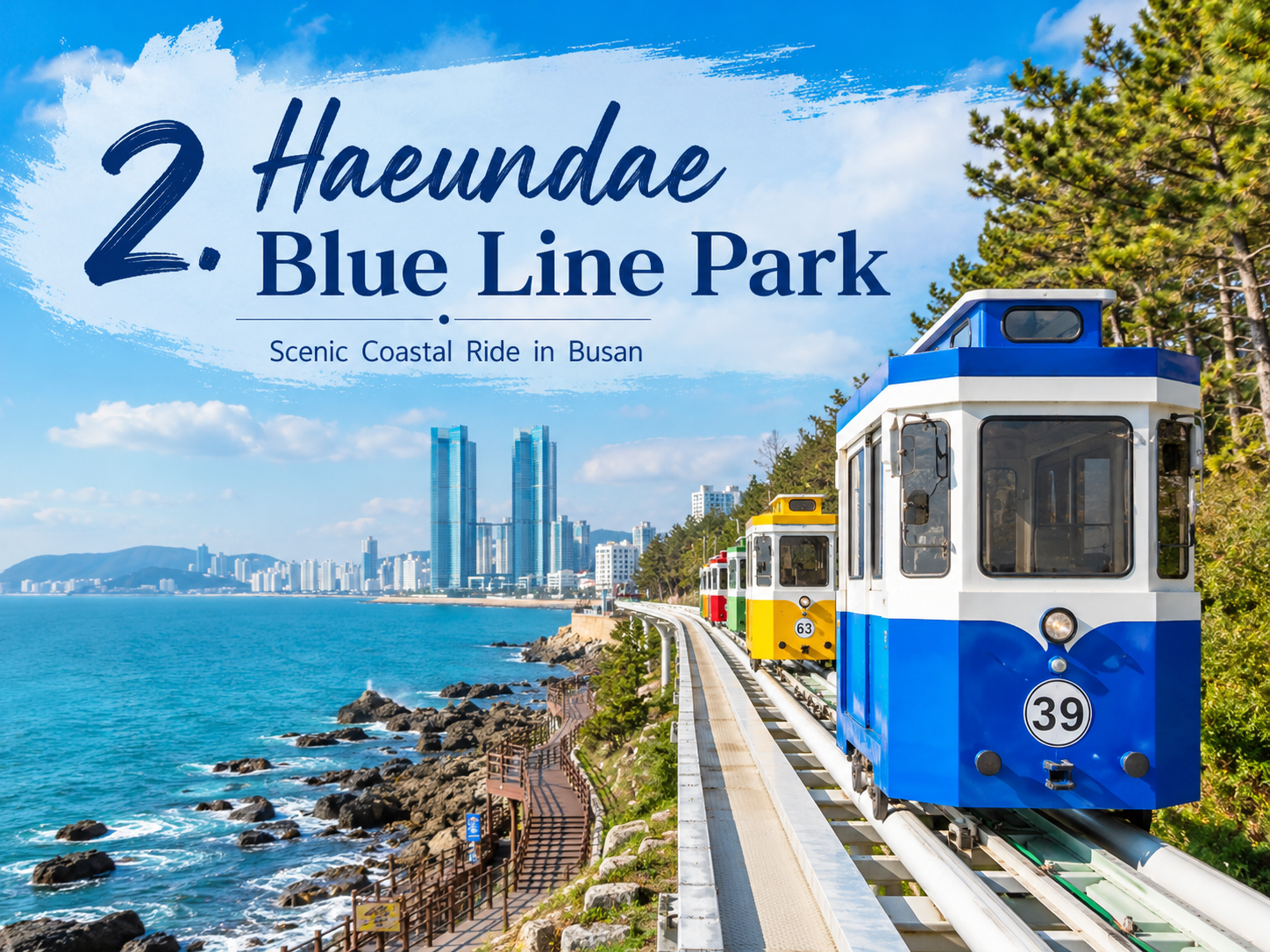
2. Haeundae Blue Line Park — One of Busan’s Best Photo Spots
From Haeundae, continue toward Mipo, Cheongsapo and Songjeong using Haeundae Blue Line Park.
The route follows 4.8 km of old coastal railway and offers two popular experiences: the Beach Train and the colorful Sky Capsule. The Sky Capsule runs about 2 km between Mipo and Cheongsapo, elevated roughly 7–10 meters above the coastal scenery.
For photos, sunset is especially beautiful.
Recommended route:
Haeundae Beach → Mipo → Sky Capsule → Cheongsapo → Songjeong
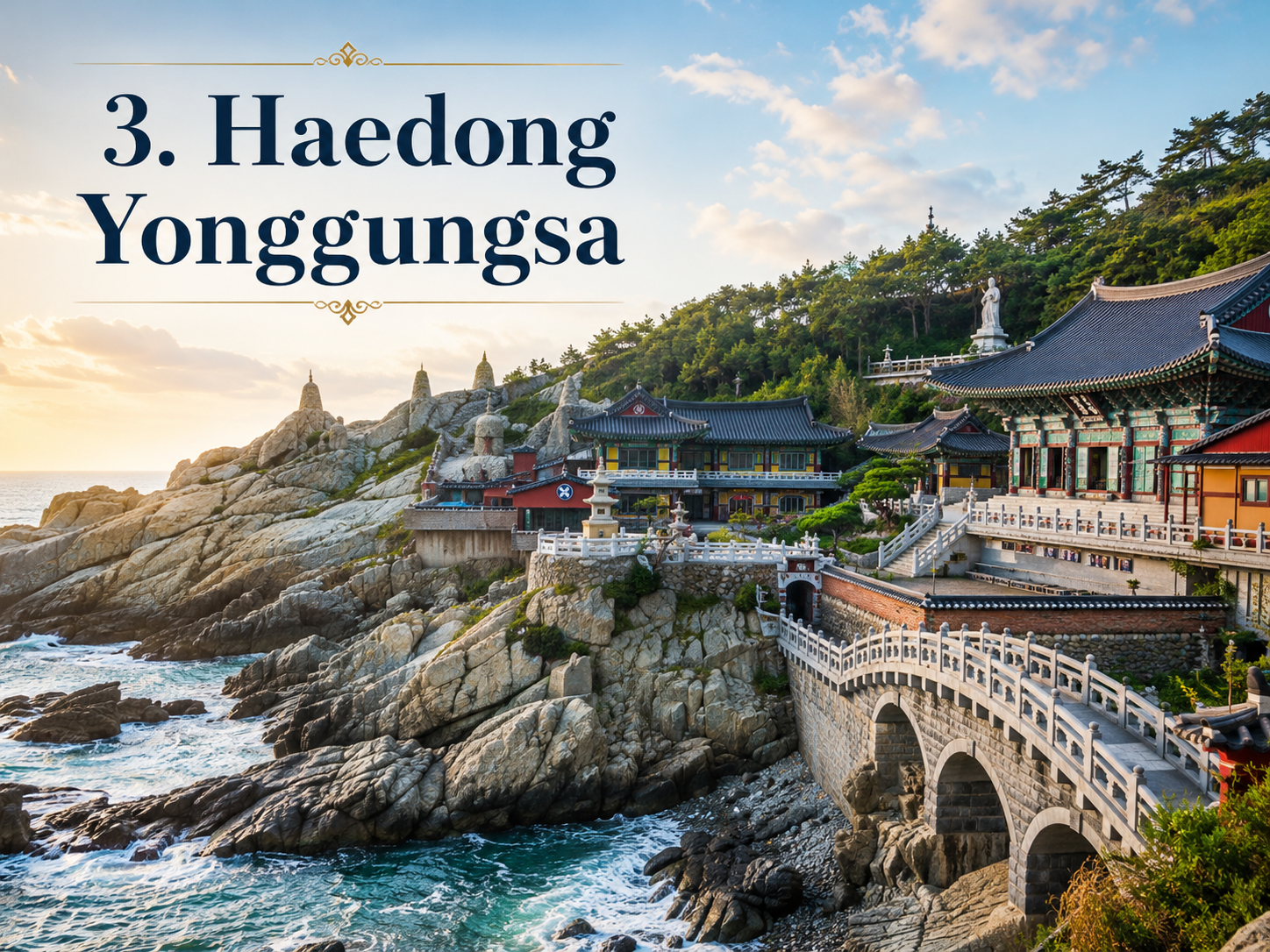
3. Haedong Yonggungsa Temple — A Temple Beside the Sea
Most traditional Korean temples are hidden in the mountains.
Haedong Yonggungsa is different.
The temple sits beside the rocky coastline in Gijang, making it one of Busan’s most memorable scenic attractions. The official Busan tourism guide particularly highlights its sea views and sunrise point.
Go early if possible. It becomes busy later in the day, especially on weekends and holidays.
Best for: Korean culture, ocean views, sunrise, photography
4. Gwangalli Beach — The Place to Be After Sunset
If I had to choose between Haeundae and Gwangalli at night, I would choose Gwangalli.
The beach directly faces Gwangandaegyo Bridge, one of Busan’s most famous landmarks. After sunset, the bridge lights reflect on the water while restaurants, cafés and bars fill the streets behind the beach. Busan tourism materials specifically recommend Gwangalli for its panoramic bridge views and different daytime/nighttime atmosphere.
Depending on the day, you may also find performances or the Gwangalli drone light show, so check the official Busan tourism schedule before visiting.
Grab fried chicken or takeaway food and sit near the beach like locals do.
Best for: night views, couples, cafés, nightlife

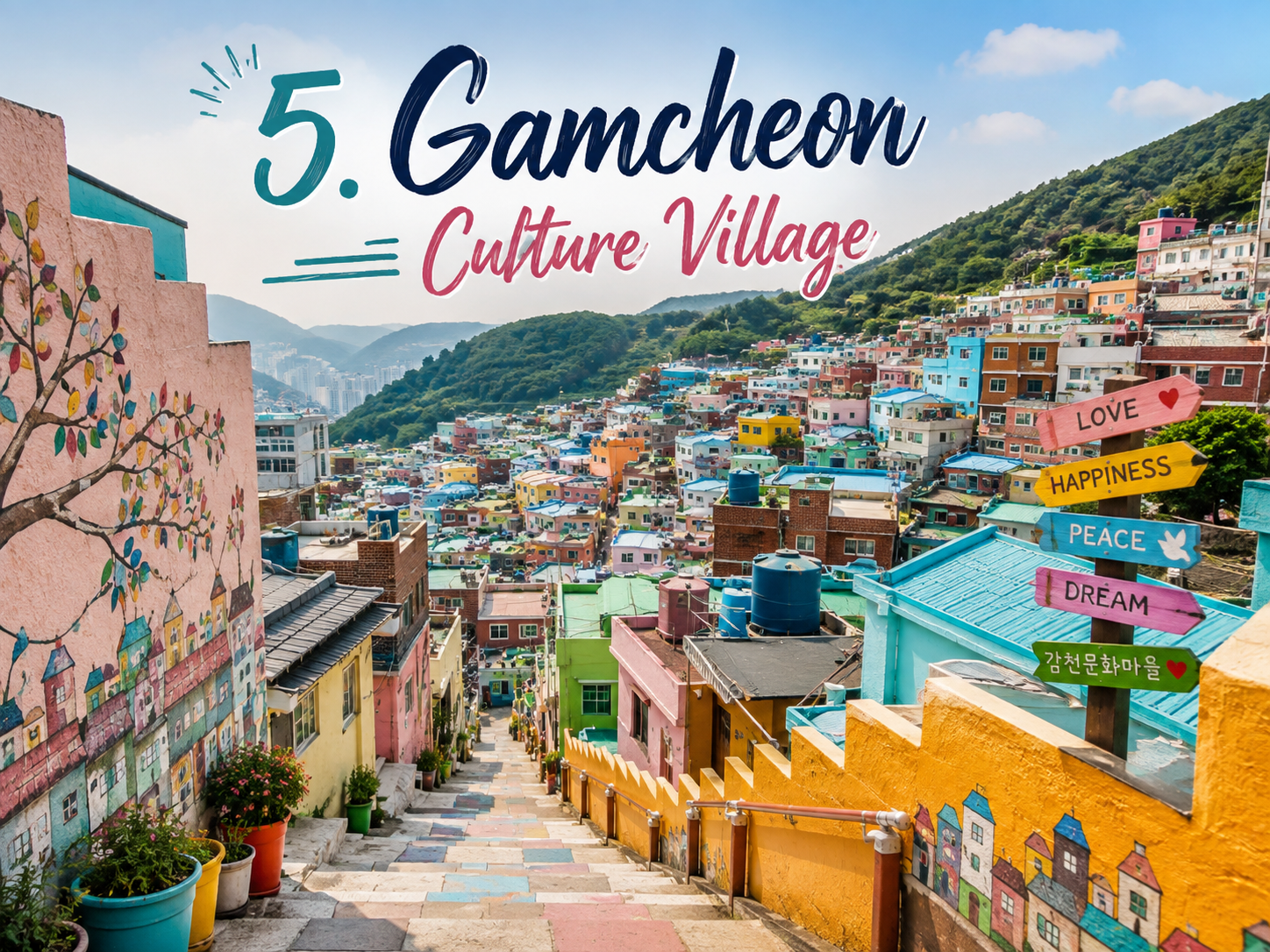
5. Gamcheon Culture Village — Busan’s Colorful Hillside Village
You have probably seen photos of Gamcheon Culture Village even if you did not know its name.
Pastel-colored houses climb the hillside while narrow streets twist through murals, cafés, viewpoints and small shops.
But remember: this is also a residential neighborhood. Visit Busan specifically asks visitors to stay quiet, keep the area clean and respect the people who live there.
Morning is usually the best time if you want photos before the busiest crowds arrive.
Best for: photography, couples, colorful streets
6. Jagalchi Market & Nampo-dong — Old Busan and Seafood
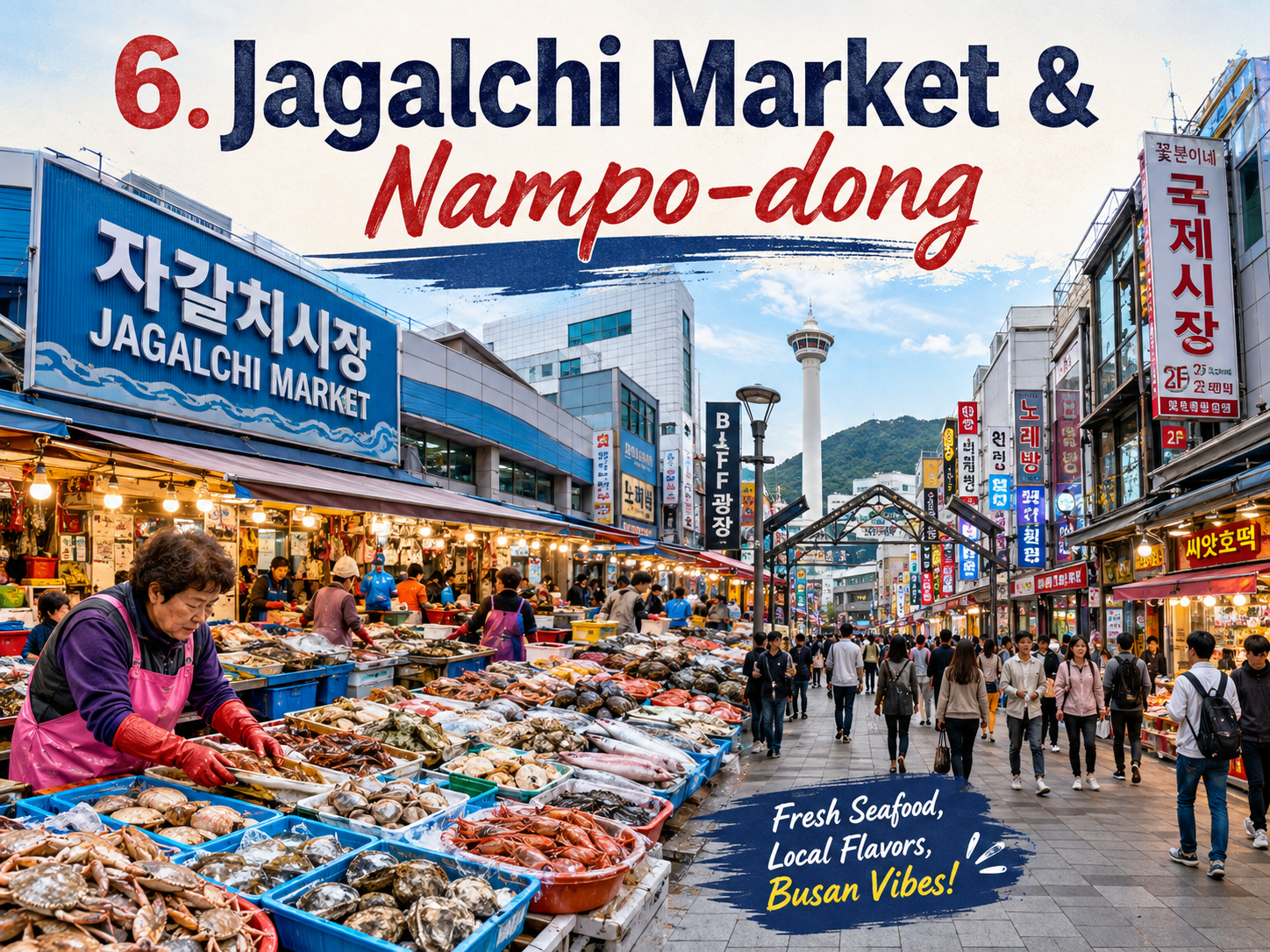
To see a more traditional side of the city, go to Jagalchi Market.
This is one of Busan’s signature seafood areas, where you can see live fish, shellfish, octopus and other seafood before choosing what to eat. The market is located near Nampo-dong, so it combines easily with BIFF Square, Gukje Market and Yongdusan Park.
Do not expect the polished atmosphere of Haeundae. This is where the city feels louder, older and much more local.
Nearby route
Jagalchi Market
→ BIFF Square
→ Gukje Market
→ Yongdusan Park
What Should You Eat in Busan?
Busan has several foods that I would choose here rather than in Seoul.
Dwaeji Gukbap — Busan’s Signature Comfort Food
Dwaeji gukbap is pork soup served with rice and is arguably Busan’s most representative local dish.
VISITKOREA even describes Busan as the “city of dwaejigukbap,” and Seomyeon has a whole alley of restaurants specializing in it.
Add chives, salted shrimp and seasoning according to your taste.
It is inexpensive, filling and especially good after a long day of walking.
Milmyeon — Cold Noodles With a Busan Identity
Milmyeon is another food strongly associated with Busan.
It is made with wheat noodles and is usually served either in a cold broth or mixed with spicy sauce. On a hot summer day after walking around Busan, this is one of the easiest local dishes to recommend.
Ssiat Hotteok — The Snack to Try Around BIFF Square
Busan’s version of hotteok is often stuffed with seeds and nuts, giving it more texture than the usual sweet pancake.
It makes an easy snack while walking around Nampo-dong and BIFF Square.
Seafood — Jagalchi, Gijang and the Coast
If you like seafood, Busan is one of Korea’s best cities for it.
Try:
- fresh sashimi (hoe)
- grilled clams
- eel
- octopus
- seafood stew
- grilled fish
For a less intimidating experience, look for a restaurant with English menus rather than ordering directly from a large seafood market stall.
Gukje Market Food Street — Eat Several Foods in One Stop
If you want to sample many local foods without traveling all over the city, Gukje Market Food Street is useful.
The area has decades of history and is known for dishes including milmyeon, dwaeji gukbap, tteokbokki, sundae, bibim dangmyeon and shaved ice.
It is especially good for travelers who enjoy eating small portions from several stalls.
A Simple 3-Day Busan Itinerary
Day 1 — Ocean & Night Views
Haeundae Beach
→ Blue Line Park / Sky Capsule
→ Cheongsapo
→ Haedong Yonggungsa
→ Gwangalli Beach at night
This is the classic “beautiful Busan” day.
Day 2 — Traditional Downtown Busan
Gamcheon Culture Village
→ Jagalchi Market
→ BIFF Square
→ Gukje Market
→ Nampo-dong
Eat seafood or market food for lunch and finish with street food in the evening.
Day 3 — Local Busan
Seomyeon Dwaeji Gukbap
→ Jeonpo Café Street
→ Taejongdae or Oryukdo
→ Korean BBQ or seafood dinner
This day is slower and gives you more time to experience the city rather than racing through attractions.
Where Should You Stay in Busan?
Haeundae
→ Best for beaches, ocean views and first-time tourists
Gwangalli
→ Best for couples, cafés and beautiful night scenery
Seomyeon
→ Best transport location for exploring different parts of Busan
Nampo-dong
→ Best for markets, traditional downtown areas and food
If it is your first visit and you only have two or three days, I would choose Haeundae or Seomyeon.
Haeundae gives you the “Busan vacation” feeling.
Seomyeon makes moving around the city easier.
Final Busan Travel Tip
The biggest mistake first-time visitors make is thinking Busan is small because it is one city.
It is very spread out.
Haeundae, Gamcheon, Nampo-dong and Gijang are not next to each other, so organize your itinerary by area, not simply by ranking attractions.
My ideal first Busan trip would include:
Haeundae for the beach
- Blue Line Park for scenery
- Gwangalli for the night view
- Gamcheon for colorful streets
- Jagalchi for seafood
- Seomyeon for dwaeji gukbap
- Haedong Yonggungsa for culture and the coast
That combination gives you beaches, food, markets, history, modern city views and local culture — the things that make Busan completely different from Seoul.
For current attraction information, events and official travel guides, check Visit Busan, the city’s official tourism website.