-
Jeju Island Travel Guide 2026: Best Places, Food & 4-Day ItineraryLifeStyle 2026. 8. 22. 11:07
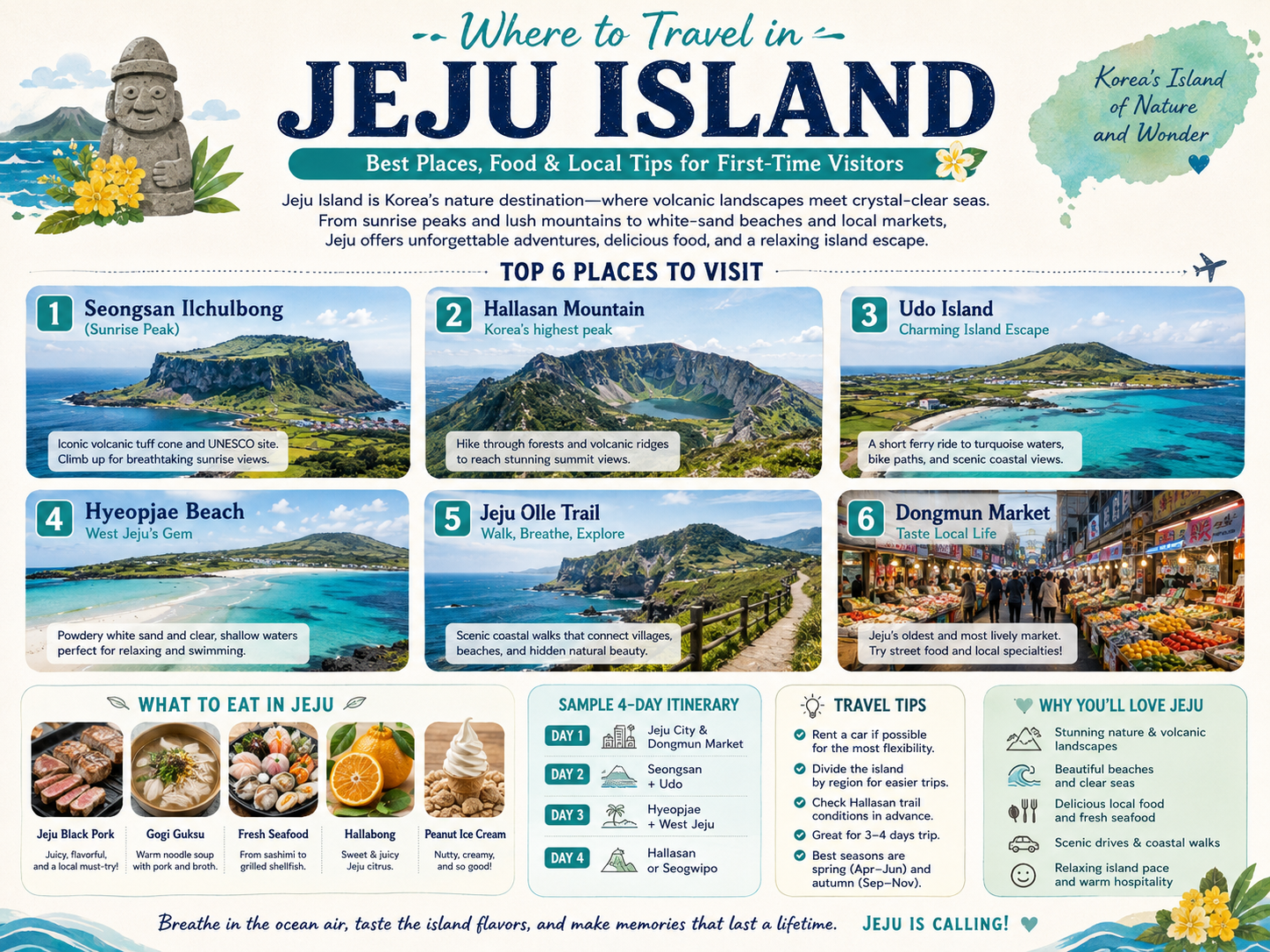
If Seoul is Korea’s energetic capital and Busan is its coastal city, Jeju Island is where you go for nature, road trips, volcanic landscapes and a slower pace of travel.
Jeju feels very different from mainland Korea. The island is famous for Hallasan Mountain, black volcanic rocks, turquoise beaches, waterfalls, coastal walking trails, tangerine farms and fresh seafood. It is also home to UNESCO-recognized natural heritage, including Seongsan Ilchulbong.
For first-time visitors, I recommend staying at least 3 to 4 days. Jeju is much bigger than it looks on a map, and attractions are spread across the east, west, north and south of the island.
1. Seongsan Ilchulbong — Jeju’s Iconic Sunrise Peak
Seongsan Ilchulbong, also known as Sunrise Peak, is one of Jeju’s most famous landmarks.
It is a volcanic tuff cone rising from the eastern coast of the island and is part of Jeju’s UNESCO World Natural Heritage area. The summit offers dramatic views of the crater, ocean and surrounding countryside.
If you can wake up early, this is one of the best places in Korea to watch the sunrise.
After visiting the peak, continue to nearby cafés or take the ferry to Udo Island.
Best for: sunrise, photography, nature, first-time visitors
Recommended route:
Seongsan Ilchulbong → Udo Island → Seopjikoji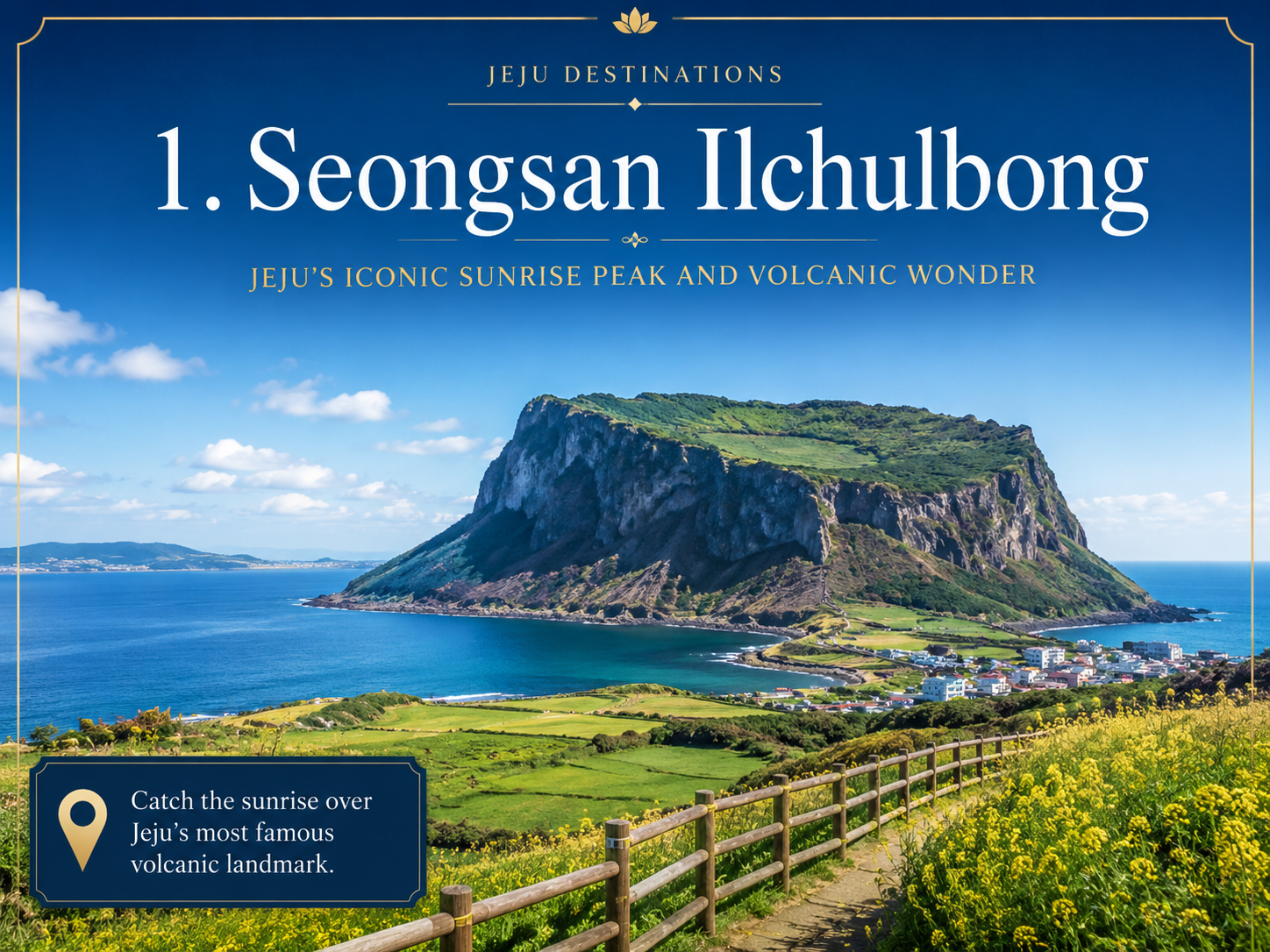
2. Hallasan Mountain — The Heart of Jeju
Rising in the middle of the island, Hallasan Mountain is the highest mountain in South Korea.
If you enjoy hiking, reaching the summit and seeing Baengnokdam crater lake is one of the most memorable experiences you can have in Jeju.
However, Hallasan should not be treated like a casual city walk.
Some summit routes require advance reservation, and trail access can change because of weather or maintenance. As of August 2026, the official reservation system shows Seongpanak operating under reservations while access on parts of the Gwaneumsa route is restricted, so always check before hiking.
If you do not want a full-day hike, Jeju also has easier forest trails and smaller volcanic hills called oreum.
Best for: hiking, nature, adventure travelers
Tip: Check the Hallasan reservation system before your trip.

3. Udo Island — A Small Island Escape
Located just off eastern Jeju, Udo Island is perfect for a half-day or full-day trip.
Ferries leave from Seongsan and Jongdal ports, with the crossing taking roughly 10–15 minutes depending on the route. Udo is about 17 km around, so many visitors explore it by bicycle or approved electric mobility vehicle.
The island has beautiful coastal roads, beaches and small cafés.
Udo is also famous for peanut ice cream, one of the island’s signature snacks.
Best for: couples, cycling, ocean scenery, slow travel
What to try:
Peanut ice cream
Fresh seafood
Jeju-style noodles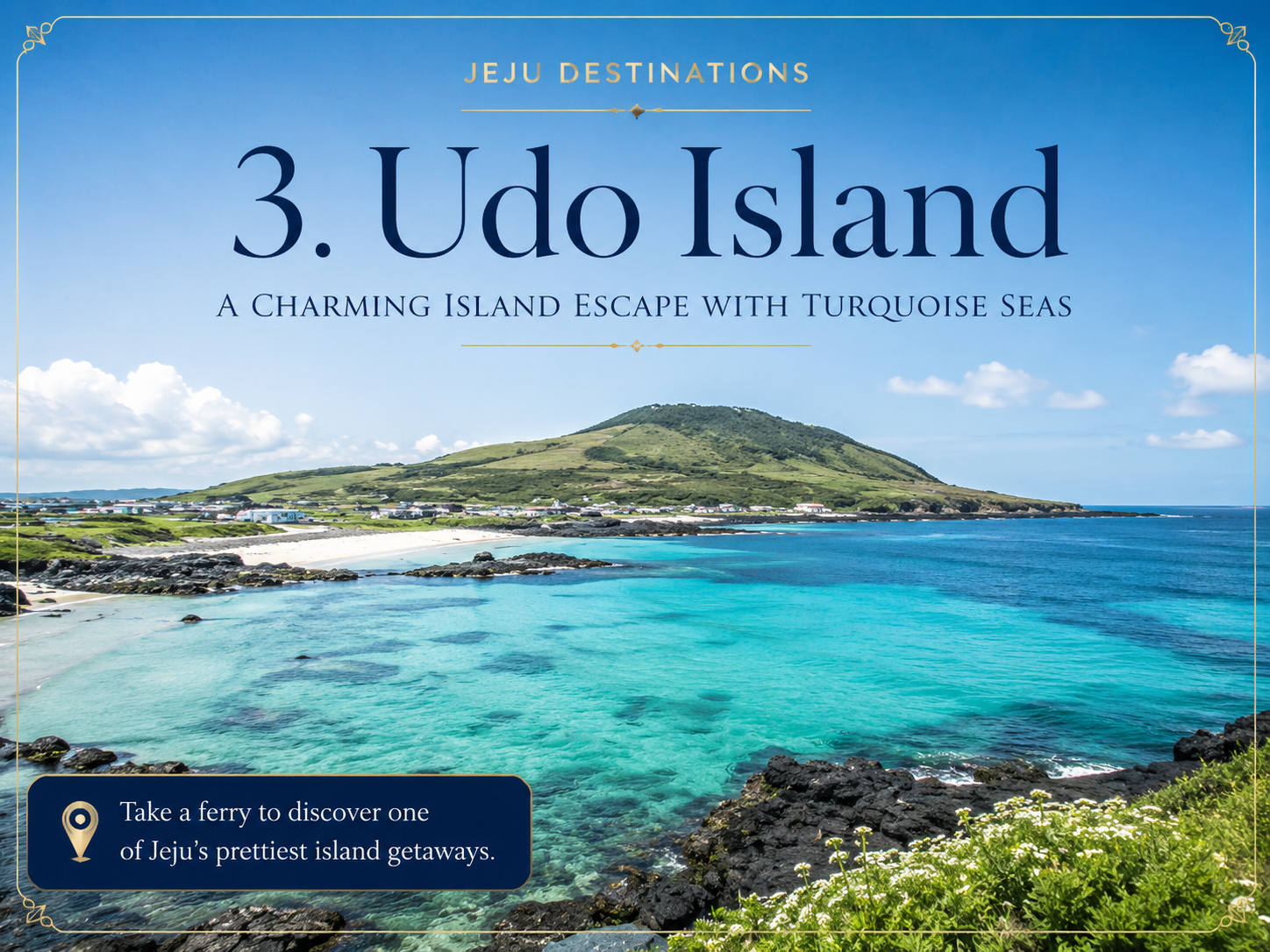
4. Hyeopjae Beach — One of Jeju’s Prettiest Beaches
For clear turquoise water and white sand, head to Hyeopjae Beach on western Jeju.
The water is relatively shallow and the beach has a beautiful view toward Biyangdo Island. It is connected to nearby Geumneung Beach, making this whole section of the western coastline perfect for a relaxed afternoon.
Sunset is especially beautiful here.
In 2026, Hyeopjae’s designated summer beach-management period runs from June 24 to September 6, with extended evening operation during part of July and August.
Best for: beaches, families, couples, sunset
Recommended route:
Hyeopjae Beach → Geumneung Beach → Hallim cafés → sunset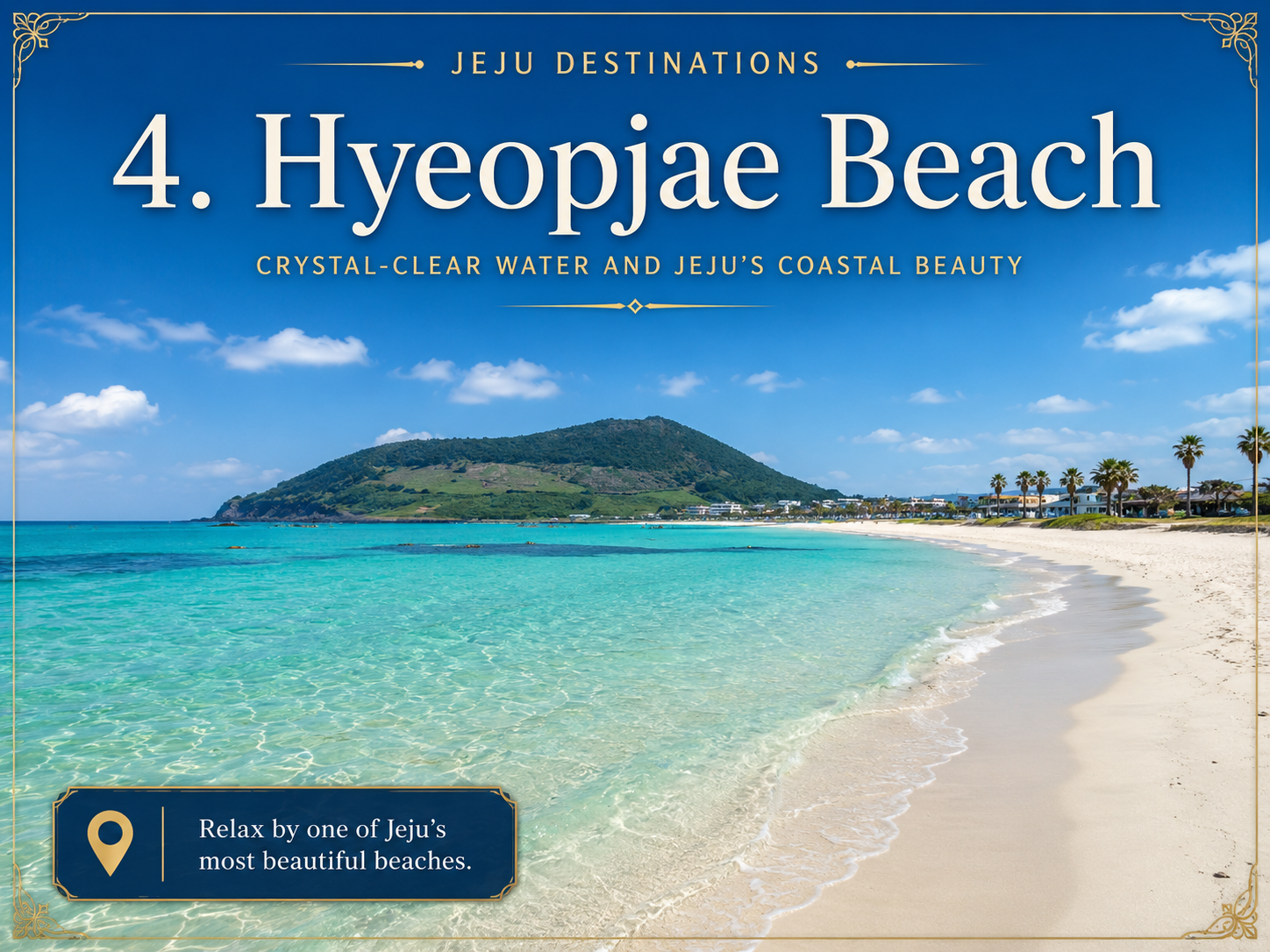
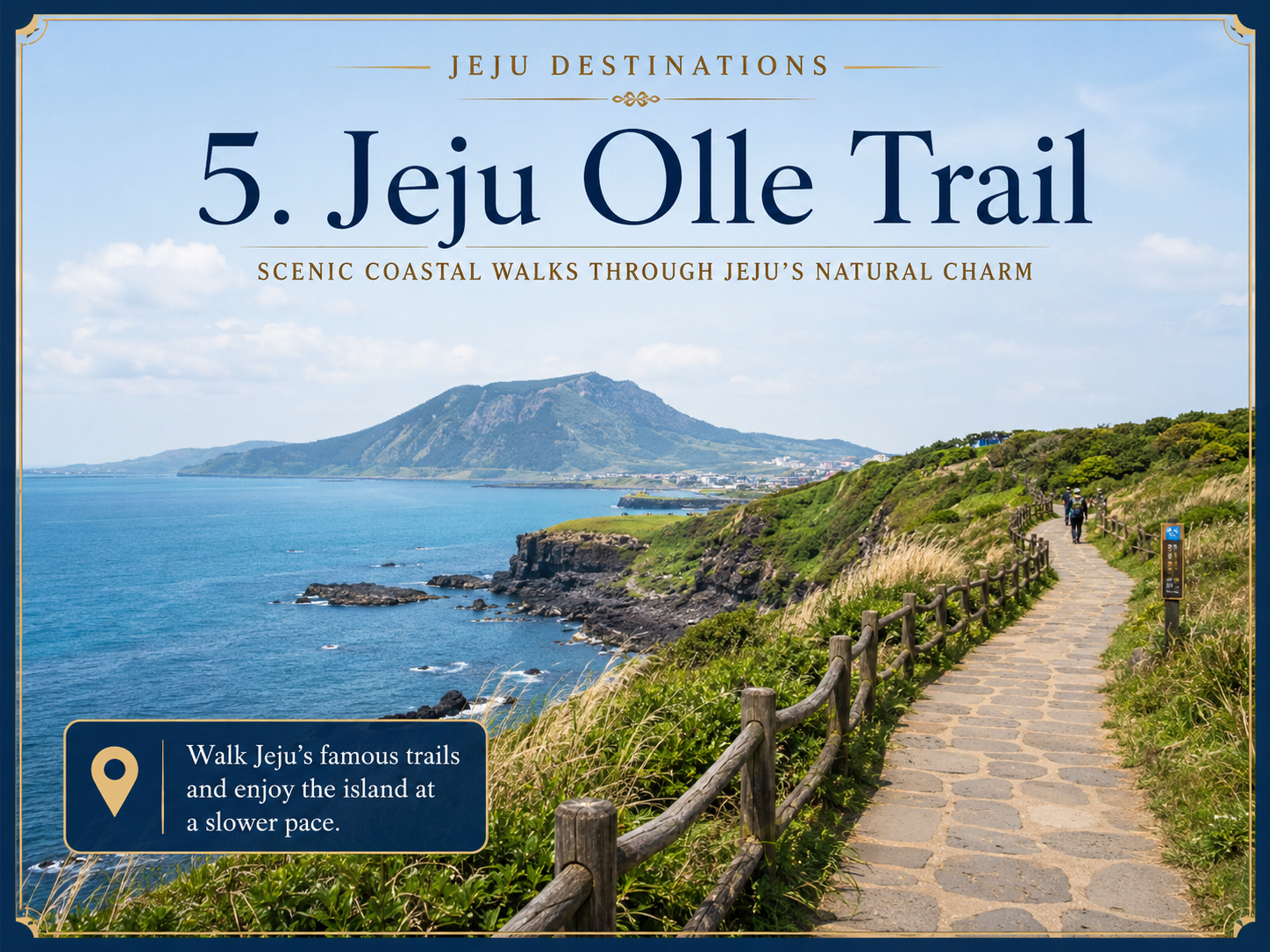
5. Jeju Olle Trail — See the Island Slowly
Jeju is not only about famous tourist attractions.
One of the best ways to experience the island is by walking sections of the Jeju Olle Trail.
The trail network connects coastal roads, villages, fields and natural scenery around Jeju and neighboring islands. Official Jeju tourism information describes 21 major routes around the island and nearby islands.
You do not need to walk an entire route.
Choose a section near your accommodation and spend two or three hours walking along the coast.
This is a great way to see a quieter side of Jeju that many package-tour visitors miss.
Best for: slow travel, walking, photography, nature
6. Dongmun Market — Food, Souvenirs and Local Life
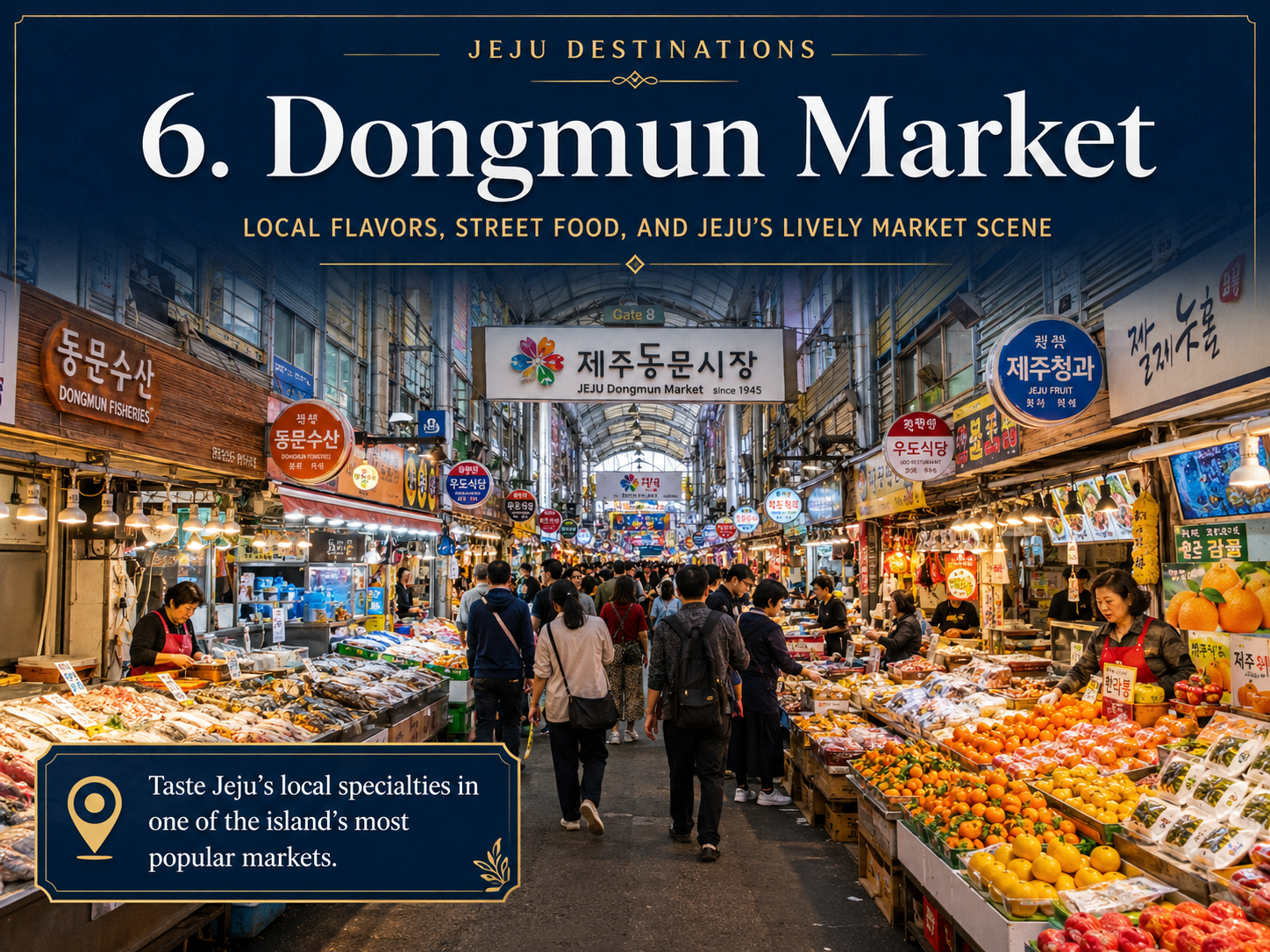
Before leaving Jeju, stop at Dongmun Traditional Market in Jeju City.
It is Jeju’s largest and oldest permanent market and combines traditional stalls, seafood, street food and a night market in one area.
It is also relatively close to Jeju Airport, making it a convenient stop on your first or last day.
You can shop for:
- Jeju tangerines
- Hallabong
- Omegitteok rice cakes
- seafood
- black pork snacks
- Jeju chocolates
- local souvenirs
The night market becomes especially lively after sunset.
Best for: food, souvenirs, local atmosphere
What Should You Eat in Jeju?
Food is a major part of a Jeju trip.
Jeju Black Pork
Probably the most famous local food is Jeju black pork.
Thick slices of pork are usually grilled at the table and eaten with vegetables, garlic, kimchi and dipping sauces.
If you only plan one big dinner in Jeju, black pork is an easy choice.
Jeju City even has a dedicated Black Pork Street known for restaurants specializing in the dish.
Gogi Guksu — Jeju Pork Noodles
Gogi guksu is a comforting bowl of noodles served in pork broth with sliced pork.
It is simple, filling and considerably cheaper than a large Korean BBQ meal.
Jeju also has an area known as Noodle Culture Street, where this local dish is especially common.
Fresh Seafood
Being an island, Jeju naturally has excellent seafood.
Look for:
- abalone
- grilled hairtail fish
- mackerel
- sashimi
- sea urchin
- octopus
Hairtail fish, known as galchi, is particularly associated with Jeju.
Hallabong & Jeju Tangerines
Jeju is famous across Korea for citrus fruit.
Depending on the season, try fresh tangerines, Hallabong juice, desserts, chocolates or citrus-flavored snacks.
Dongmun Market is an easy place to shop for them.
A Simple 4-Day Jeju Itinerary
Day 1 — Jeju City & Local Food
Jeju Airport
→ Dongmun Market
→ Jeju City cafés
→ Black pork dinnerKeep your first day easy, especially if you arrive in the afternoon.
Day 2 — Eastern Jeju
Seongsan Ilchulbong
→ Udo Island
→ Seopjikoji
→ coastal caféThis is one of the most scenic days you can plan in Jeju.
Day 3 — Western Jeju
Hyeopjae Beach
→ Geumneung Beach
→ Hallim area
→ sunset caféThis day is more relaxed and works especially well for couples.
Day 4 — Hallasan or Southern Jeju
Option A:
Hallasan hikingOption B:
Seogwipo
→ waterfall
→ Olle Trail
→ Maeil Olle MarketIf you are not a serious hiker, I would choose the second option.
Should You Rent a Car in Jeju?
For most travelers, renting a car makes Jeju much easier.
Unlike Seoul, attractions are spread across the entire island and traveling between them by bus can take a long time.
A rental car lets you stop at small beaches, cafés, oreum and viewpoints that would otherwise be difficult to include.
However, foreign visitors should check whether their driver's license and International Driving Permit meet Korean rental requirements before booking.
If you do not want to drive, you can still use buses and taxis, but I recommend staying within one region each day rather than crossing the island repeatedly.
Where Should You Stay in Jeju?
Jeju City
→ Best for airport access, Dongmun Market and short staysSeogwipo
→ Best for waterfalls, southern attractions and relaxed eveningsSeongsan
→ Best for Seongsan Ilchulbong and UdoAewol
→ Best for cafés, ocean views and couplesHyeopjae / Hallim
→ Best for beaches and western JejuFor a 3–4 day first trip, I would split accommodation between Jeju City and Seogwipo, or stay in one central location if you have a rental car.
Final Jeju Travel Tip
The biggest mistake people make in Jeju is trying to drive around the entire island every day.
Instead, divide the island into areas:
East: Seongsan + Udo
West: Hyeopjae + Hallim
South: Seogwipo + waterfalls
Center: Hallasan
North: Jeju City + Dongmun MarketThis saves travel time and gives you more time to actually enjoy each destination.
My ideal first Jeju trip would include:
Seongsan Ilchulbong for iconic scenery
- Udo for island life
- Hyeopjae for the beach
- Hallasan for nature
- Olle Trail for slow travel
- Dongmun Market for food
Jeju is not a destination that needs to be rushed.
Leave some empty time in your itinerary, stop at an ocean-view café, drive along the coast and enjoy the landscapes between attractions.
That slower pace is a big part of what makes Jeju Island one of the most beautiful places to visit in South Korea.
For current opening hours, trail conditions and attraction information, check the official Visit Jeju website.
'LifeStyle' 카테고리의 다른 글