-
Sokcho Travel Guide 2026: 6 Best Places to Visit, Local Food & 2-Day ItineraryLifeStyle 2026. 8. 22. 17:29
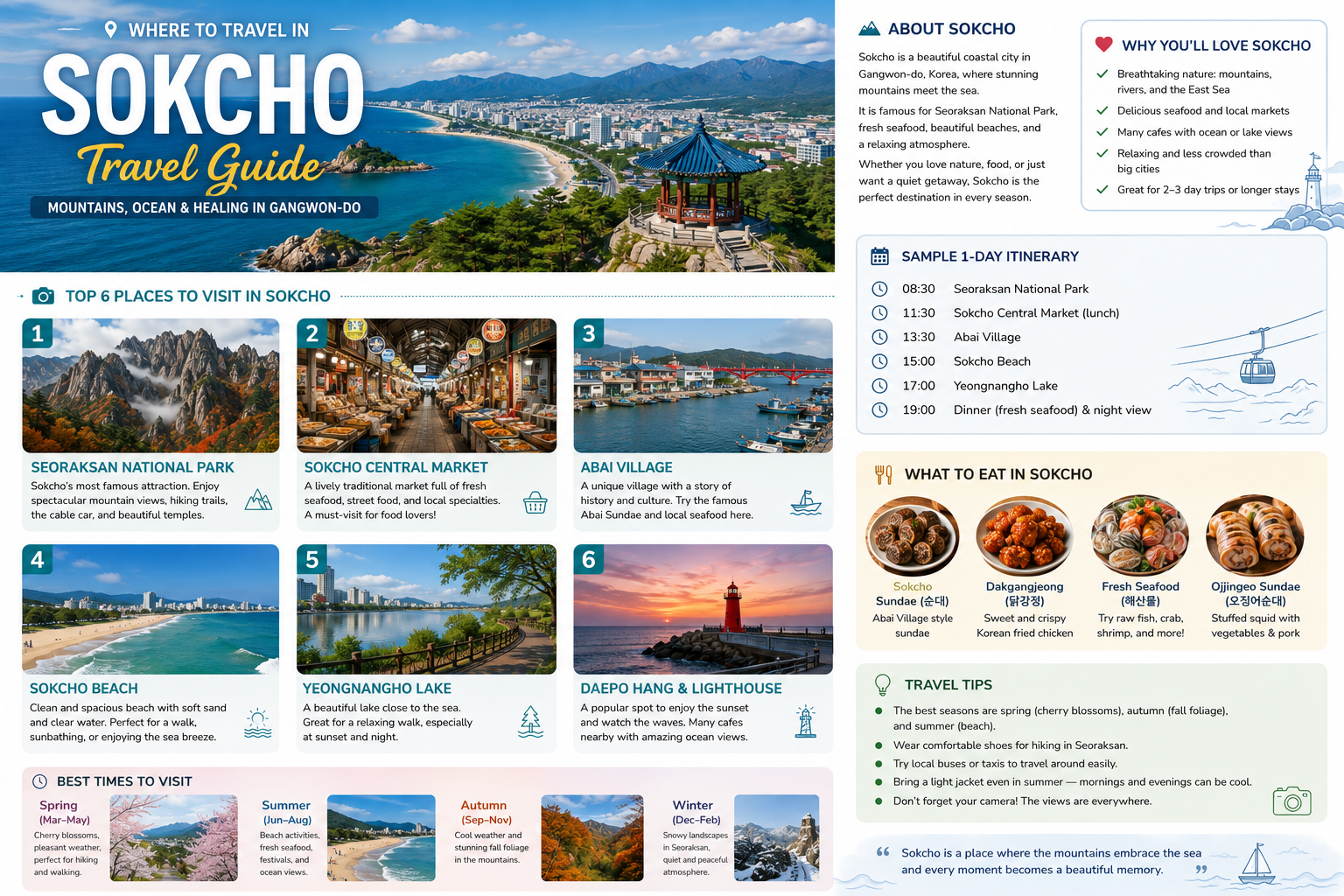
If you are looking for a destination in South Korea where you can enjoy mountains, beaches, seafood, local markets, and peaceful scenery in one trip, Sokcho should definitely be on your list.
Located on Korea’s beautiful east coast in Gangwon State, Sokcho is best known as the gateway to Seoraksan National Park, but there is much more to the city than hiking.
You can start your morning surrounded by dramatic mountain peaks, spend the afternoon walking beside the East Sea, eat fresh seafood and crispy Korean fried chicken at a traditional market, and finish the day beside a quiet lake.
Compared with Seoul or Busan, Sokcho also has a much slower atmosphere. It is a great destination for travelers who want to take a break from crowded cities while still having plenty of things to see and eat.
For a first visit, I recommend spending at least two days in Sokcho.
Here are six places you should not miss.
1. Seoraksan National Park — Sokcho’s Most Famous Natural Attraction
[Insert the image: “1. Seoraksan National Park” here]
Seoraksan National Park is easily the most famous attraction around Sokcho and one of the most beautiful mountain areas in South Korea.
The park is famous for dramatic granite peaks, deep valleys, streams, forests, waterfalls, and hiking trails. Sokcho is considered one of the main gateways to Seoraksan, where visitors can either hike through the mountain or enjoy elevated scenery using the cable-car area.
One of the biggest advantages of visiting Seoraksan is that you do not have to be an experienced mountain climber.
Serious hikers can spend an entire day exploring long mountain routes, while casual travelers can enjoy the lower trails, visit temples, or simply walk through the forest.
Autumn is probably the most spectacular season.
Around October, the forests turn red, orange, and yellow while the gray granite peaks rise above the colorful landscape. This makes Seoraksan one of Korea’s most popular autumn destinations.
Spring is also beautiful because of fresh green forests, while winter offers dramatic snow-covered mountain scenery.
Best for
- Hiking
- Nature
- Photography
- Autumn foliage
- Couples and families
Recommended time
Half day to full day
Travel tip
If you visit during autumn foliage season, arrive as early as possible. Weekends can become extremely crowded.

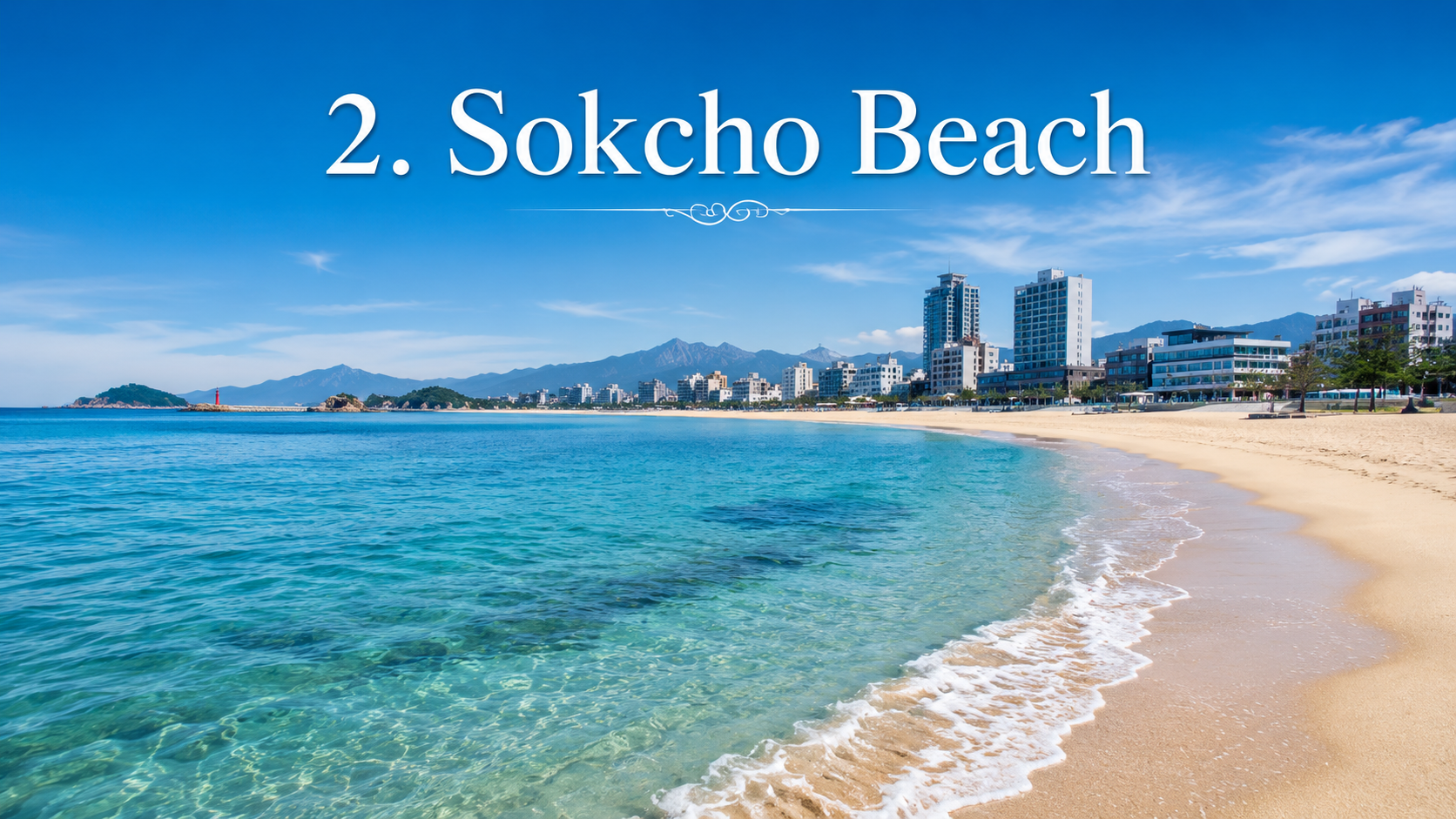
2. Sokcho Beach — Relax Beside the East Sea
[Insert the image: “2. Sokcho Beach” here]
After spending several hours in the mountains, there is nothing better than heading toward Sokcho Beach.
This is one of the things that makes Sokcho special: you can go from mountain scenery to the ocean in the same day.
The beach has a long sandy shoreline and clear blue water, with Sokcho’s buildings and Seoraksan visible in the distance.
During summer it becomes a popular swimming destination, but you do not have to visit during beach season to enjoy it.
Spring and autumn are actually great times for a peaceful walk because there are fewer people and the temperature is more comfortable.
You can grab a coffee, walk along the shore, sit on the beach, or simply listen to the waves.
The Sokcho Beach area is also convenient for travelers arriving by express bus because the terminal is nearby.
Best for
- Beach walks
- Couples
- Families
- Summer vacations
- Relaxing after hiking
Recommended time
1–3 hours
Travel tip
If your hotel is near Sokcho Beach, try waking up early at least once. Korea’s east coast is famous for beautiful sunrise views.
3. Yeonggeumjeong Pavilion — One of Sokcho’s Best Ocean Views
[Insert the image: “3. Yeonggeumjeong Pavilion” here]
For a more dramatic view of the East Sea, visit Yeonggeumjeong Pavilion.
The pavilion sits above the rocky coastline and provides wide-open views of the ocean.
Its name is associated with the sound created when ocean waves hit the coastal rocks, which was said to resemble the sound of the traditional Korean string instrument called geomungo. VISITKOREA recommends the spot throughout the day: sunrise in the morning, blue seascapes during daylight, and calmer ocean views under the moon at night.
This means Yeonggeumjeong is a place you can easily fit into almost any Sokcho itinerary.
Morning travelers can visit for sunrise.
Afternoon visitors can enjoy the bright blue ocean.
And at night, lights around the pavilion and nearby port create a completely different atmosphere.
Nearby you can also visit Sokcho Lighthouse Observatory, which offers panoramic views of Sokcho, the East Sea, and Seoraksan Mountain.
Best for
- Sunrise
- Ocean photography
- Couples
- Short walks
- Night scenery
Recommended time
30 minutes to 1 hour
Recommended route
Yeonggeumjeong
→ Sokcho Lighthouse Observatory
→ Dongmyeong Port
→ Seafood dinner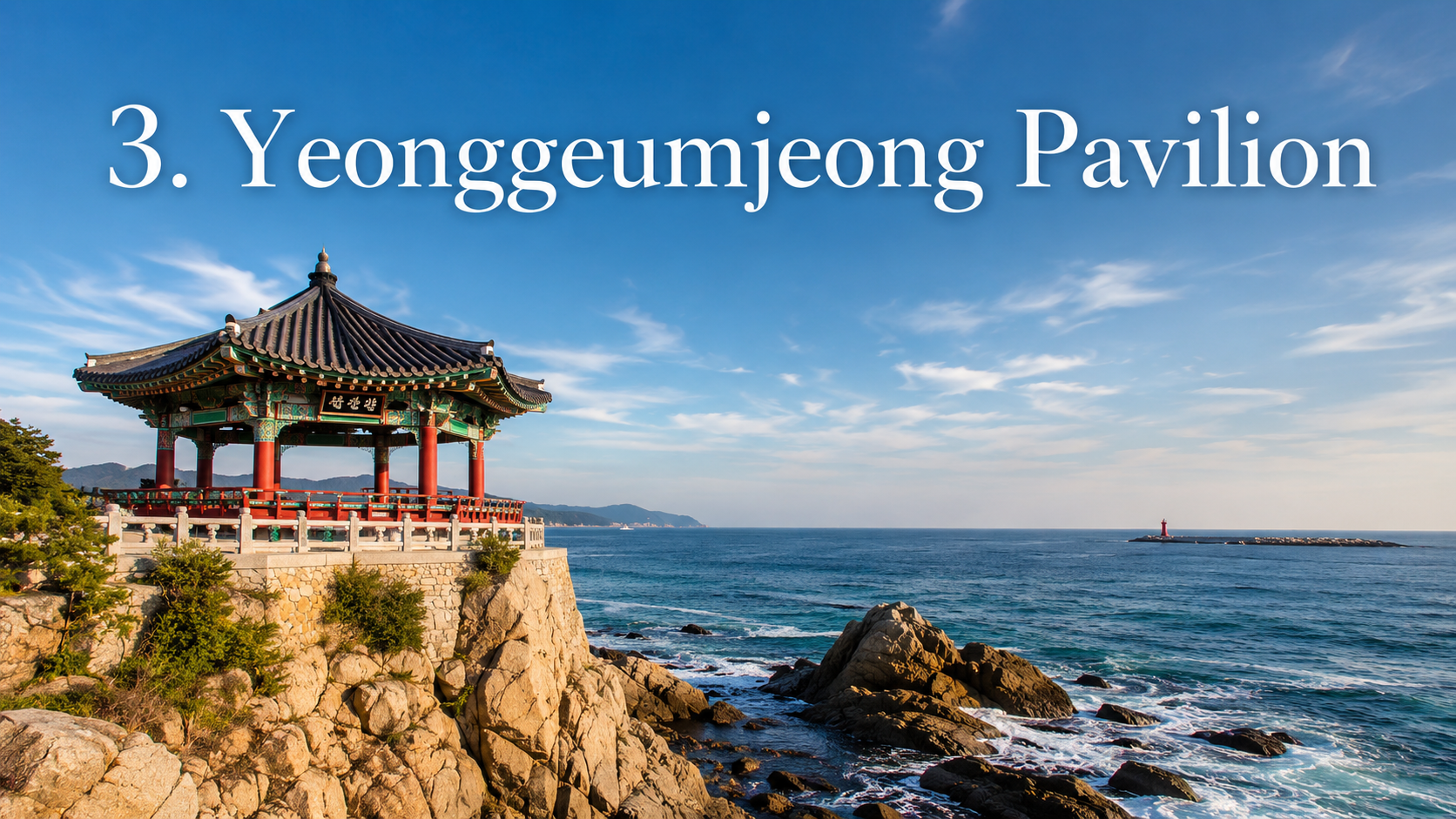
4. Sokcho Tourist & Fishery Market — The Best Place for Local Food
[Insert the image: “4. Sokcho Tourist & Fishery Market” here]
If food is one of the reasons you travel, Sokcho Tourist & Fishery Market may become one of your favorite places in the city.
Formerly known as Sokcho Jungang Market, it is one of Sokcho’s major traditional markets.
The market contains fresh seafood sellers, general stores, fruit and vegetable stalls, salted seafood shops, blood-sausage shops, and a famous chicken alley filled with dakgangjeong restaurants.
And yes, dakgangjeong is probably the food you will see the most.
It is crispy fried chicken coated in a sticky, sweet-and-spicy sauce.
But do not visit the market only for chicken.
You should also look for:
- Ojingeo sundae — stuffed squid
- Abai sundae — local Korean sausage
- Fresh sashimi
- Snow crab
- Fried seafood
- Salted seafood
- Hotteok
- Various Korean street foods
Official tourism guides specifically highlight dakgangjeong, ojingeo sundae, Abai sundae, snow crab, and fresh East Sea seafood as some of the specialties visitors can try here.
The market is also covered, so it is a good option on rainy or snowy days.
Best for
- Street food
- Seafood
- Souvenirs
- Local culture
- Rainy days
Recommended time
1–2 hours
Travel tip
Walk around the market once before ordering. There are many stores selling similar dishes, so you do not necessarily need to buy from the first crowded restaurant you see.

5. Abai Village & Gaetbae Ferry — Discover Sokcho’s Unique History
[Insert the image: “5. Abai Village & Gaetbae Ferry” here]
Sokcho is not only about beautiful scenery.
Abai Village offers visitors a glimpse into one of the more unusual parts of modern Korean history.
The village developed during the Korean War when refugees from Hamgyeong Province in what is now North Korea settled near the coast. Many of the foods associated with the neighborhood, including Abai sundae and Hamheung-style cold noodles, reflect that refugee heritage.
One of the most fun ways to reach the area is the Gaetbae Ferry.
This is not a normal motorized ferry.
The small vessel moves across the narrow waterway by pulling an iron cable, and passengers can even help operate it using hooks.
VISITKOREA still lists the hand-pulled ferry as one of the distinctive experiences connecting Abai Village with downtown Sokcho.
The ride itself is short, but it feels very different from modern Korean public transportation.
Once inside Abai Village, stop for local food.
Foods to try
- Abai sundae
- Ojingeo sundae
- Hamheung naengmyeon
- Pollack sashimi salad
Best for
- Korean history
- Local culture
- Food
- Unique travel experiences
Recommended time
1–2 hours
Recommended route
Sokcho Tourist & Fishery Market
→ Gaetbae Ferry
→ Abai Village
→ Cheongchoho area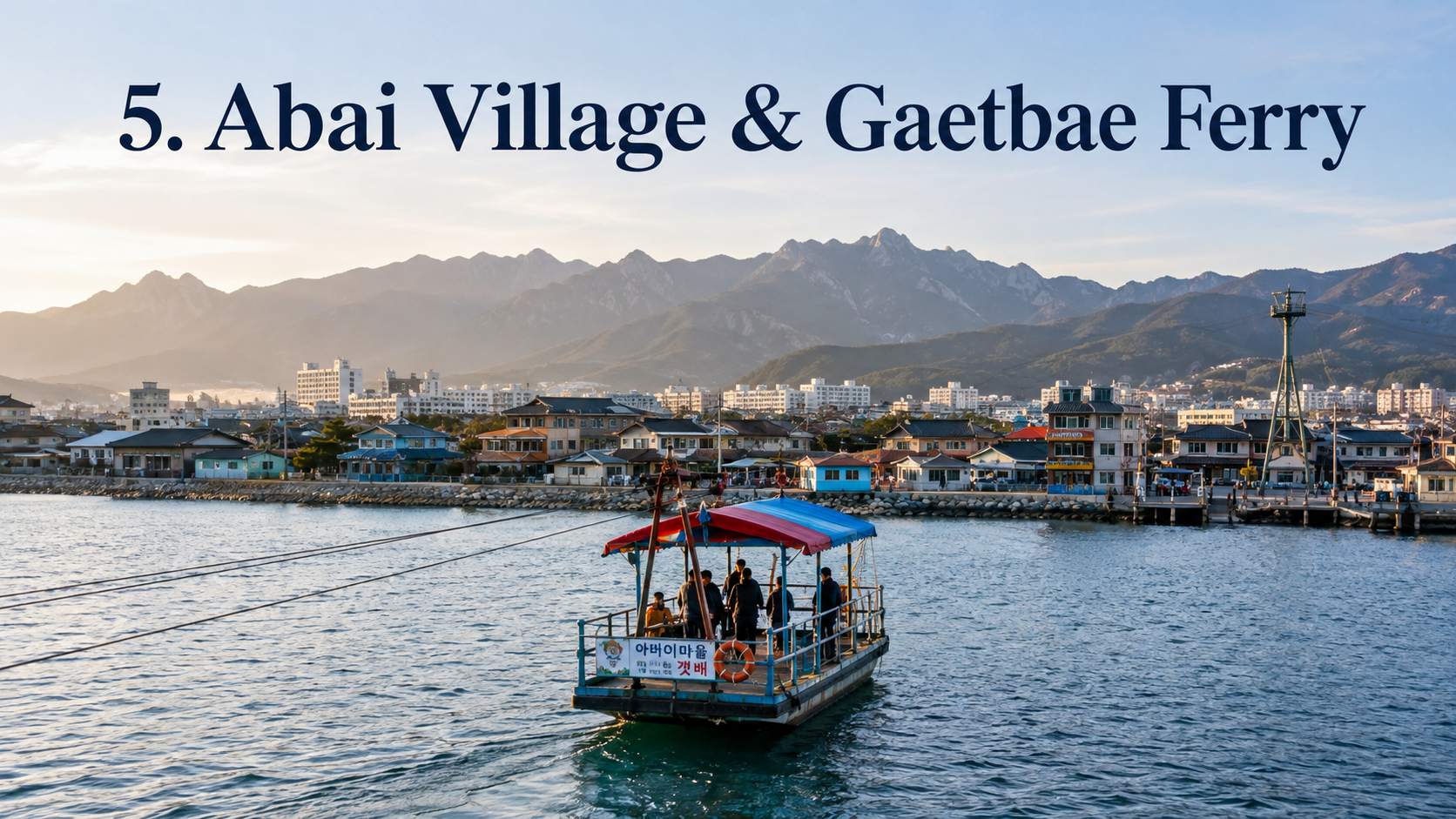
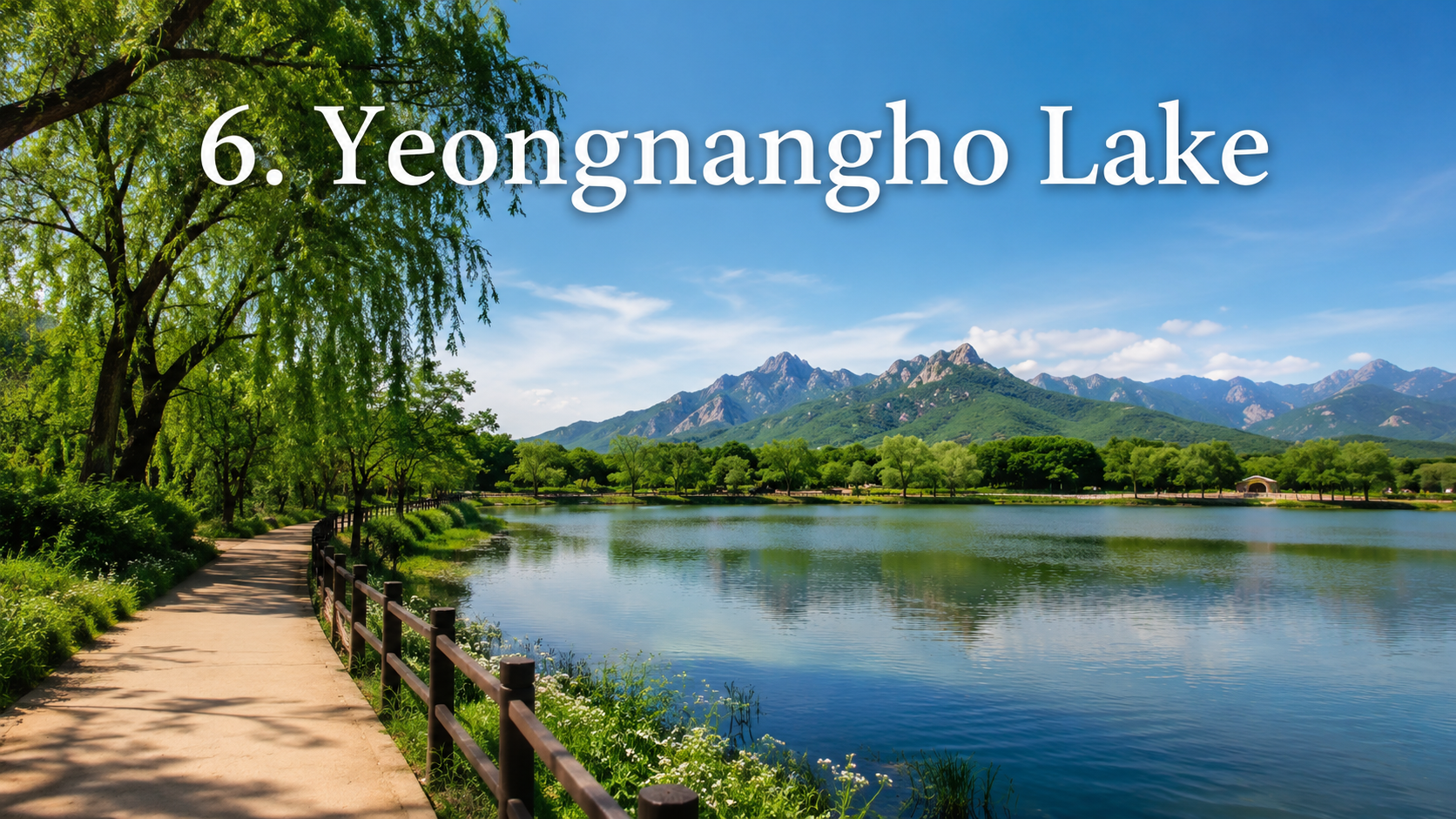
6. Yeongnangho Lake — Slow Down and Enjoy Sokcho
[Insert the image: “6. Yeongnangho Lake” here]
After hiking mountains, visiting markets, and exploring the coast, finish your Sokcho trip somewhere peaceful.
Yeongnangho Lake is one of the city’s representative coastal lagoons and is surrounded by mountain scenery and walking routes. VISITKOREA highlights the lake as one of Sokcho’s scenic places, including the famous Beombawi Rock viewpoint.
This is not a place where you need to rush from one attraction to another.
Instead, walk beside the water, rent a bicycle, take photographs, or stop at a nearby café.
On a calm day, the surrounding mountains can reflect beautifully across the lake.
Spring is especially attractive when flowers and fresh greenery appear, while autumn brings colorful trees around the water.
It is also an excellent destination for travelers visiting with parents because you can enjoy impressive scenery without climbing a difficult mountain trail.
Best for
- Walking
- Cycling
- Couples
- Families
- Relaxing
- Photography
Recommended time
1–2 hours
Travel tip
Visit in the late afternoon and stay until sunset for softer light and peaceful scenery.
What to Eat in Sokcho
Food deserves its own section because Sokcho has a very different culinary identity from Seoul.
The city combines East Sea seafood with foods influenced by North Korean refugee communities.
Dakgangjeong
Probably Sokcho’s best-known snack.
It is fried chicken coated in sweet and spicy sauce and is especially famous at Sokcho Tourist & Fishery Market.
Buy a box and share it while walking around town or bring it back to your hotel.
Ojingeo Sundae
Despite the word “sundae,” this has nothing to do with ice cream.
Korean sundae refers to sausage.
For ojingeo sundae, squid is stuffed with seasoned ingredients and sliced into round pieces.
It is one of Sokcho’s signature foods.
Abai Sundae
Try this in Abai Village.
The dish reflects the food traditions brought to Sokcho by North Korean refugees after the Korean War.
Fresh Seafood
Sokcho is a port city on the East Sea, so seafood is naturally everywhere.
Try:
- sashimi (hoe)
- snow crab
- squid
- shellfish
- grilled fish
- spicy seafood stew
If you like seafood, Sokcho is one of the easiest places in Korea to build an entire day around eating.
2-Day Sokcho Itinerary for First-Time Visitors
Day 1 — Mountains, Market & Local Culture
08:30 — Seoraksan National Park
Start early and spend the morning hiking or enjoying the lower mountain trails.
12:30 — Lunch
Try Korean food near the national park or return downtown.
14:00 — Sokcho Tourist & Fishery Market
Try dakgangjeong, seafood, and other local snacks.
16:00 — Gaetbae Ferry & Abai Village
Cross the waterway and explore the historic neighborhood.
18:00 — Sokcho Beach
Relax beside the ocean.
19:30 — Seafood dinner
Finish the day with fresh East Sea seafood.
Day 2 — Ocean Views & Slow Travel
08:00 — Yeonggeumjeong Pavilion
Start the day with ocean scenery.
09:00 — Sokcho Lighthouse Observatory
Enjoy panoramic views of the city.
11:00 — Coffee / brunch
Visit one of Sokcho’s coastal cafés.
13:00 — Sokcho Beach
Spend more time beside the sea if the weather is good.
15:30 — Yeongnangho Lake
Walk or cycle beside the lake.
18:00 — Final market visit or dinner
Buy snacks or souvenirs before leaving Sokcho.
Where to Stay in Sokcho
Sokcho Beach Area
Choose this area if you want:
- easy beach access
- ocean-view hotels
- cafés
- proximity to the express bus terminal
This is probably the easiest option for first-time international visitors.
Downtown / Central Market Area
Best for:
- restaurants
- Sokcho Market
- Abai Village
- local atmosphere
- easier access to different parts of town
Near Seoraksan
Best for travelers whose main goal is hiking.
You can reach the mountain earlier, but the area is much quieter at night.
Best Time to Visit Sokcho
Spring — March to May
Great for hiking, flowers, lake walks, and comfortable temperatures.
Summer — June to August
Best for Sokcho Beach and ocean activities.
Expect larger crowds during Korean summer vacation.
Autumn — September to November
Probably the most spectacular season.
Seoraksan’s autumn colors make this one of Korea’s most famous fall destinations.
Winter — December to February
Cold, but excellent for snowy Seoraksan views, quiet beaches, seafood, and fewer tourists.
Final Thoughts: Is Sokcho Worth Visiting?
Absolutely.
Sokcho is one of those destinations that shows you how diverse South Korea can be outside Seoul.
Within two days you can experience:
Seoraksan National Park for mountains
- Sokcho Beach for the ocean
- Yeonggeumjeong for sunrise
- Sokcho Market for local food
- Abai Village for history
- Yeongnangho Lake for relaxation
Official Korean tourism itineraries themselves emphasize Sokcho’s combination of mountain, ocean, lakes, markets, food, and the unique Gaetbae experience.
For travelers visiting Korea for a week or longer, Sokcho is also an excellent way to escape Seoul for a night or two.
Instead of another day surrounded by skyscrapers and shopping malls, you can wake up near the East Sea, walk through one of Korea’s most beautiful national parks, eat fresh seafood, and watch the sun disappear behind the mountains.
That is what makes Sokcho one of the best hidden gems to add to a South Korea itinerary.
'LifeStyle' 카테고리의 다른 글