-
Incheon Travel Guide 2026: 6 Best Places to Visit, Food & 2-Day ItineraryLifeStyle 2026. 8. 23. 00:04
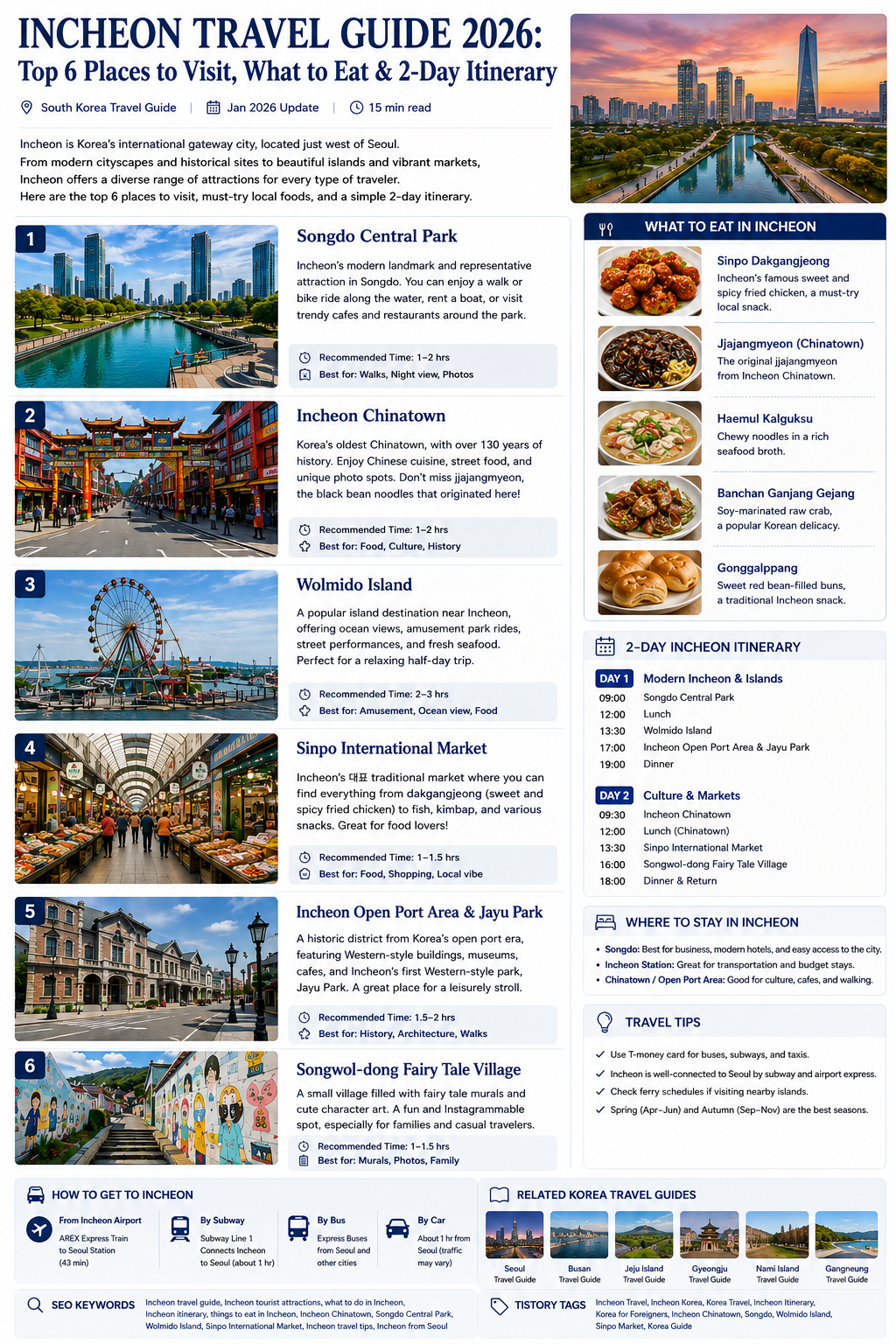
Most international travelers know Incheon as the place where their trip to Korea begins.
After landing at Incheon International Airport, many visitors immediately take the train to Seoul and never really explore Incheon itself.
That is a shame, because Incheon is much more than Korea’s main airport.
It is a coastal city where modern skyscrapers, Korean-Chinese culture, traditional markets, historic port streets and seaside attractions all exist within the same region.
You can spend the morning surrounded by futuristic buildings in Songdo, eat jjajangmyeon in Korea’s most famous Chinatown for lunch, walk through streets that played an important role in Korea’s modern history, and finish your day watching the sunset beside the sea at Wolmido.
For first-time visitors, I recommend 1–2 full days in Incheon.
If you are staying in Seoul, the historic areas of Incheon also work very well as a day trip.
Here are six places I would recommend for your first Incheon trip.
1. Songdo Central Park — Incheon’s Futuristic Cityscape
If you want to see the modern side of Incheon, start with Songdo Central Park.
Songdo has a completely different atmosphere from older parts of Incheon.
High-rise buildings surround a large park and waterway, creating a cityscape that feels much more futuristic than traditional Korea.
Songdo Central Park is especially interesting because it is Korea’s first park to use seawater in its waterway. Visitors can walk beside the canal and, depending on operating conditions, enjoy activities such as water taxis, canoes and boats. The park itself is open 24 hours, while boat facilities have separate operating hours that can vary with weather and season.
You do not really need a complicated plan here.
Walk along the water, visit a café, take photos of the skyline and simply enjoy the open space.
I especially recommend arriving in the late afternoon.
During the day, you can clearly see the modern architecture surrounding the park. After sunset, lights from the skyscrapers reflect on the water and the atmosphere changes completely.
Best for: modern architecture, walking, couples, photography, night views
Best time: late afternoon to evening
Recommended route:
Songdo Central Park → canal walk → café → sunset & night view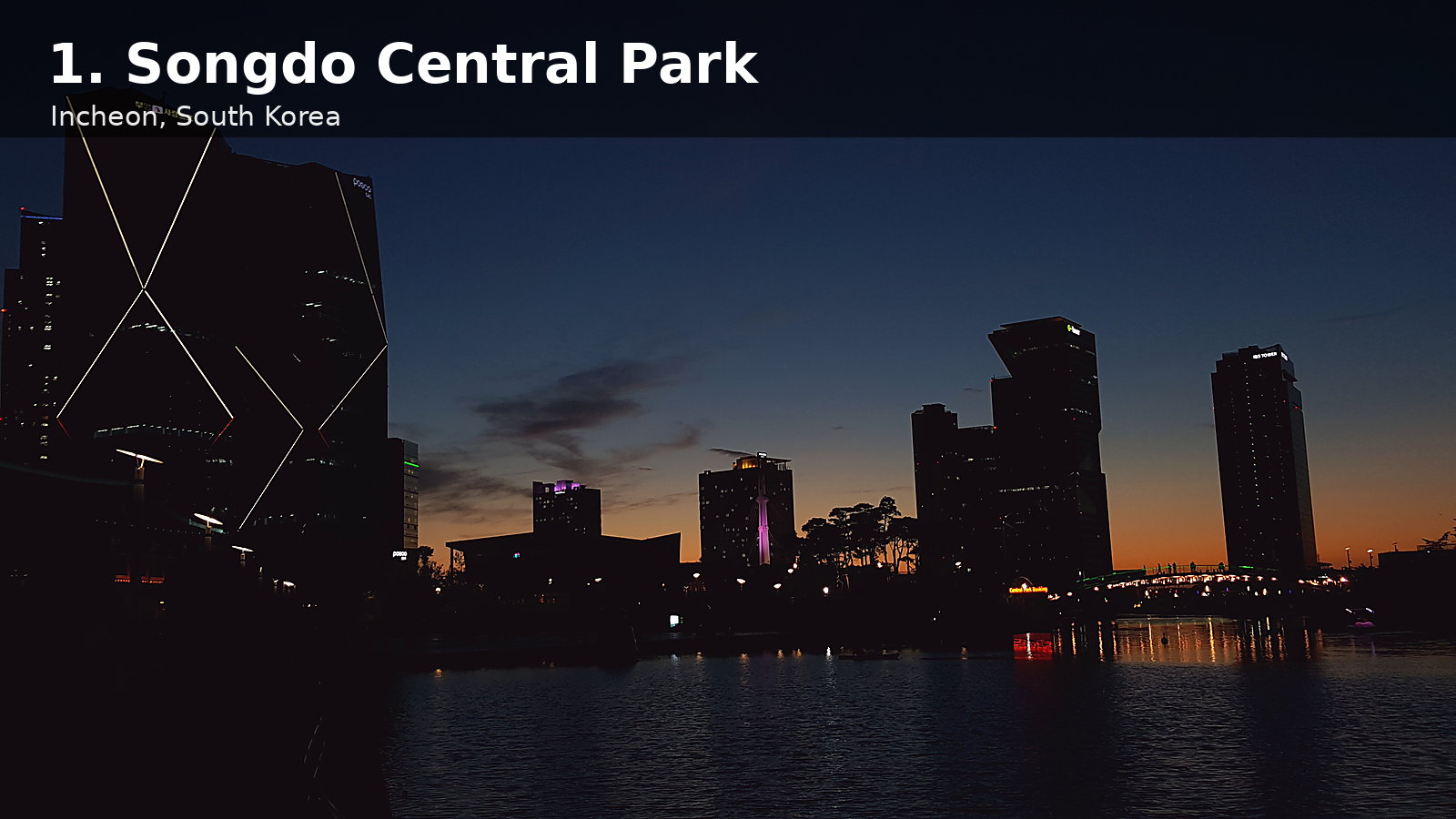
2. Incheon Chinatown — History, Food & Jjajangmyeon
A completely different side of Incheon can be found at Incheon Chinatown.
The neighborhood began developing after Incheon Port opened in 1883, followed by the establishment of a Qing extraterritorial settlement in the area in 1884. Chinese merchants and residents settled here, and that history eventually shaped one of Korea’s best-known Korean-Chinese neighborhoods.
Today, Chinatown is filled with red gates, colorful streets, restaurants, bakeries, small museums and stores.
But there is one food you absolutely have to try here:
Jjajangmyeon.
Jjajangmyeon is a noodle dish covered with a thick black-bean sauce, usually containing pork and vegetables.
You can find it almost anywhere in Korea today, but Incheon Chinatown is closely connected with the development of Korean-style jjajangmyeon. The surrounding streets are also home to the Jjajangmyeon Museum and numerous long-running Korean-Chinese restaurants.
If you are traveling with another person, I recommend ordering several dishes and sharing:
Jjajangmyeon
Jjamppong
Tangsuyuk
DumplingsThat gives you a much better introduction to Korean-Chinese food than ordering only one dish.
Best for: Korean-Chinese food, history, street photography, families
Recommended time: 2–3 hours
Recommended route:
Chinatown → Songwol-dong Fairy Tale Village → Jayu Park → Open Port Area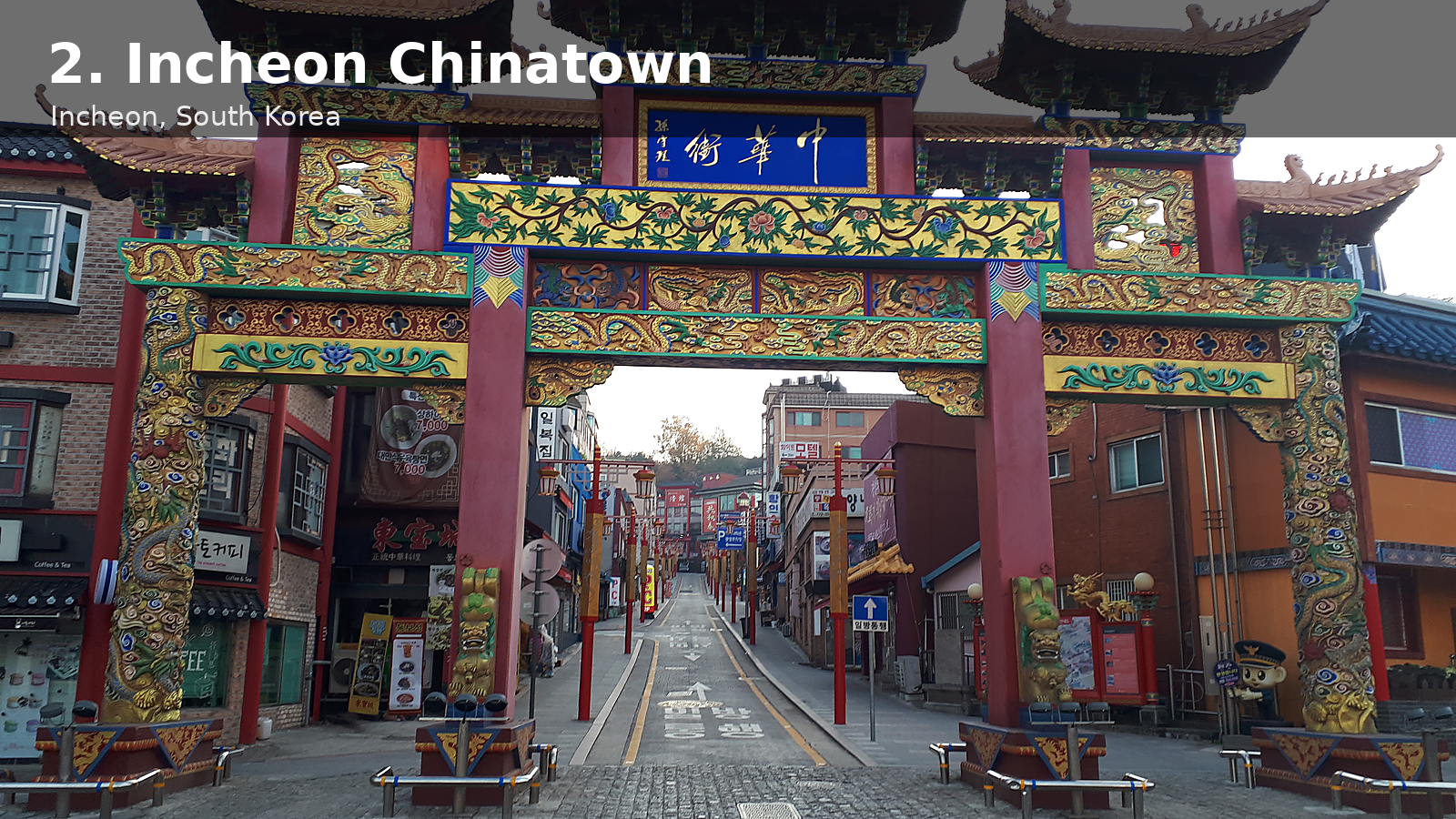
3. Wolmido Island — Ocean Views, Amusement Rides & Sunset
If you want to relax beside the ocean, visit Wolmido.
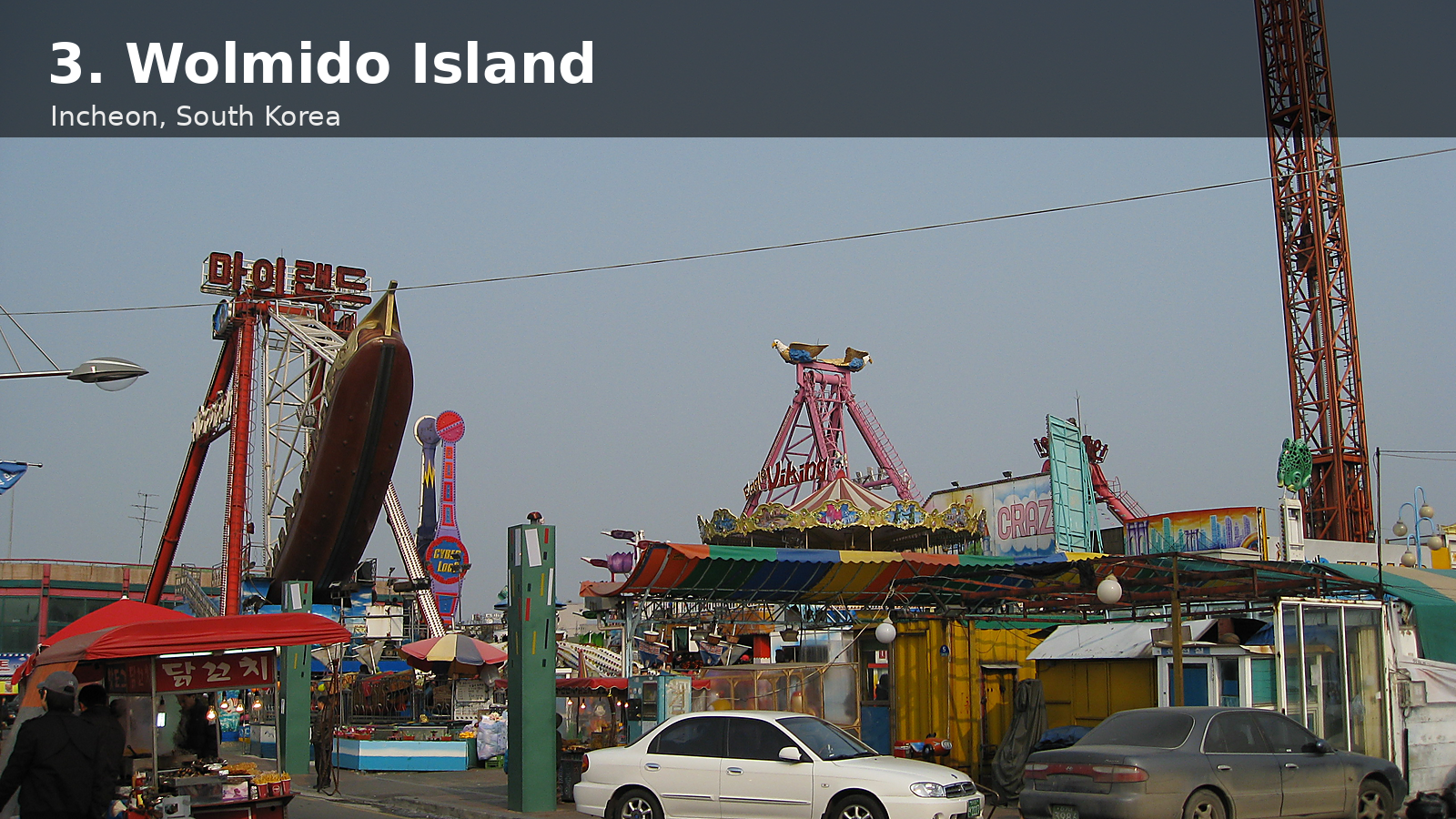
Wolmido developed into a popular resort area in the early 20th century, and Wolmi Culture Street opened in 1989. Today, the area is known for cafés, seafood restaurants, amusement facilities and coastal walks.
It feels very different from Songdo.
Songdo is modern, polished and quiet.
Wolmido feels more casual and playful.
You can walk along the waterfront, eat seafood, visit cafés or enjoy amusement rides.
If you have watched Korean variety shows or social-media videos, you may have seen the famous Disco Pang Pang, where the ride operator tries to make passengers bounce around while joking with them.
You can also ride the Wolmi Sea Train, an elevated tourist monorail that offers views over the surrounding city and coastline. VISITKOREA recommends the Wolmi area as part of a relaxed Incheon sightseeing route.
For me, the best time to visit Wolmido is late afternoon.
Enjoy the area before sunset, have dinner, and then stay until the amusement rides and waterfront lights turn on.
Best for: ocean views, couples, families, amusement rides, sunset
Recommended time: 3–4 hours
Tip: Make Wolmido your final destination of the day rather than visiting early in the morning.
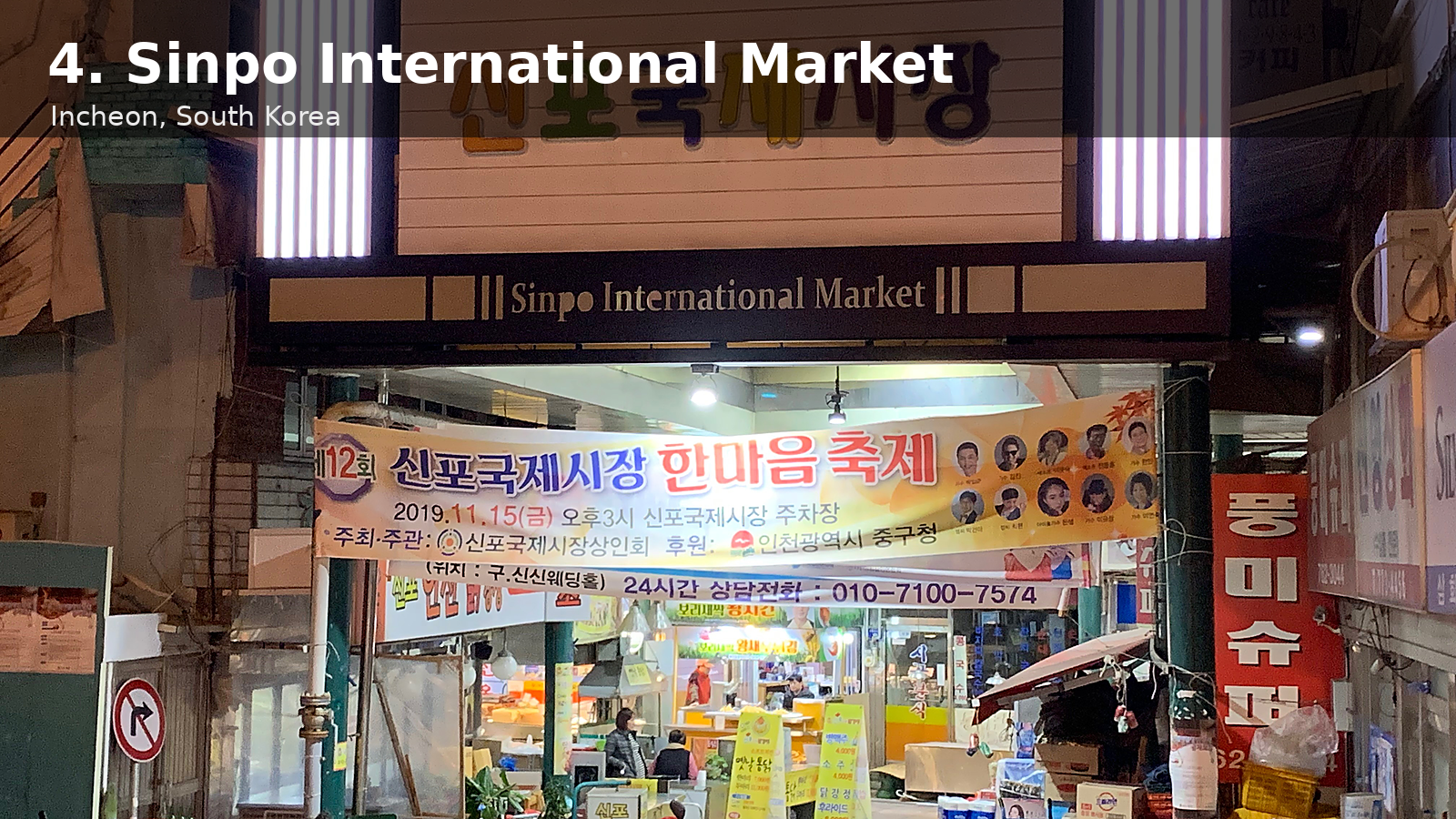
4. Sinpo International Market — Incheon’s Famous Food Market
If food is an important part of your Korea trip, do not skip Sinpo International Market.
The market has more than 100 years of history and developed into one of Incheon’s representative markets as the port city grew. Today, it is famous for both traditional market culture and local street food.
The most famous food is dakgangjeong.
Dakgangjeong is crispy fried chicken coated in a sticky sauce that is both sweet and spicy.
You may see long lines outside some famous stores, particularly on weekends.
But do not eat only chicken.
Other foods worth trying include:
Jjolmyeon
Dumplings
Korean noodle soup
Gonggal bread
Sundae
Fried fish
SeafoodVISITKOREA actually recommends visiting the market on an empty stomach because of the variety of food available.
That is probably the best advice for this place.
Do not eat a huge lunch beforehand.
Walk through the entire market first and buy several smaller foods to share.
Best for: Korean street food, traditional markets, shopping, local culture
Must try: dakgangjeong
Recommended time: 1–2 hours
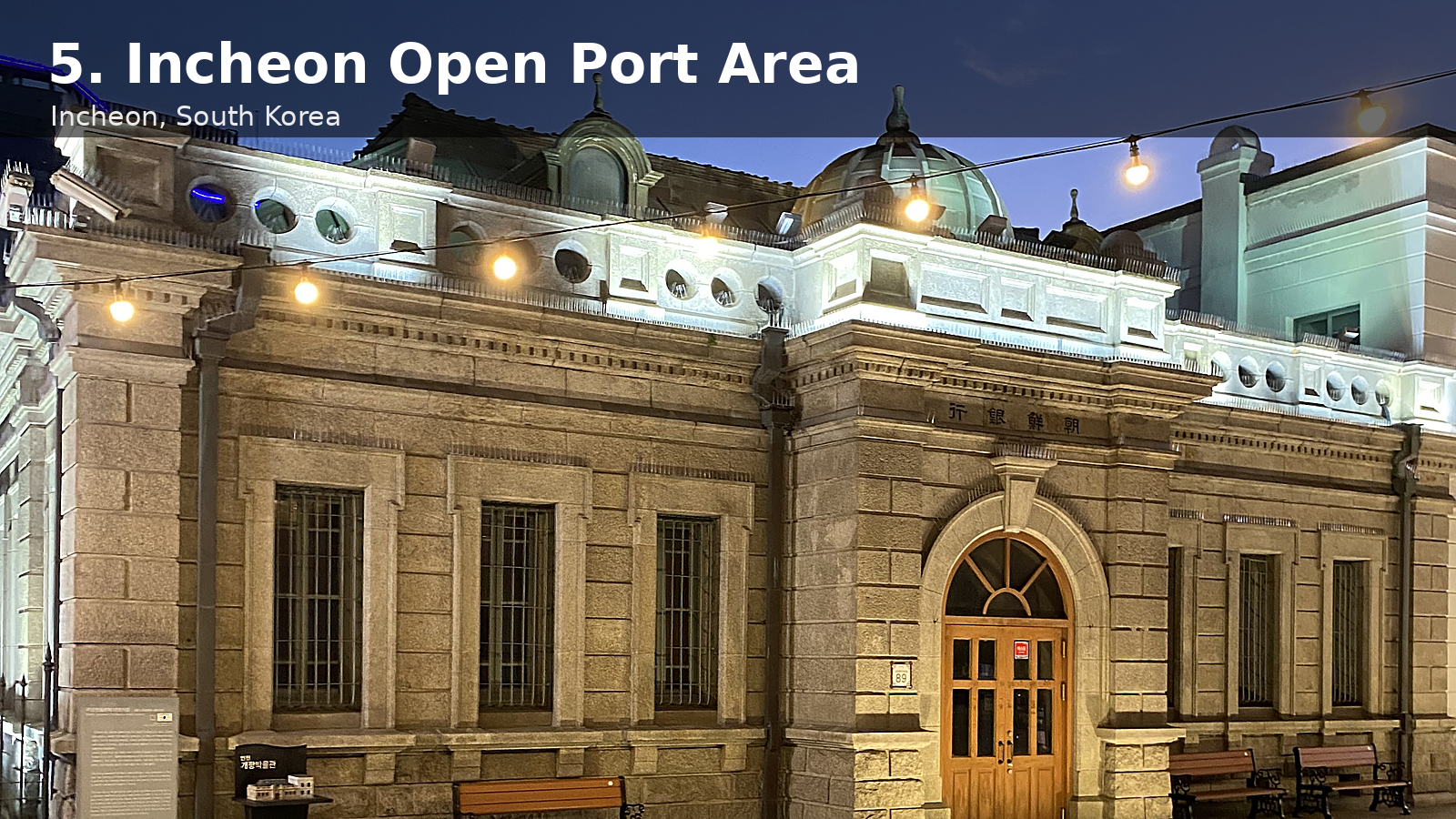
5. Incheon Open Port Area & Jayu Park — Walk Through Modern Korean History
One of the most interesting things about Incheon is its role in Korea’s modern history.
Incheon Port opened in 1883, and the area around the port became one of the main places where foreign architecture, trade and modern institutions entered Korea.
Today, you can still walk through streets containing buildings and architectural elements connected to that period.
For example, the Incheon Open Port Museum is housed in the former Bank of Japan building and contains exhibitions about the modern culture and technology introduced to Korea after the port opened.
Nearby streets also preserve Japanese-style buildings associated with the former concession area.
From the Open Port Area, continue uphill toward Jayu Park.
Jayu Park was built five years after Incheon Port opened and is regarded as Korea’s first Western-style park. The elevated location provides views over Incheon, and the park also contains the Korea-U.S.A. Centennial Monument and the statue of General Douglas MacArthur.
This is one of the best areas in Incheon for travelers who enjoy walking rather than visiting one giant tourist attraction.
Best for: Korean modern history, architecture, walking, photography
Recommended time: 2–3 hours
Recommended route:
Chinatown → Open Port Area → historic streets → Jayu Park → Sinpo MarketTip: Wear comfortable shoes. There are several hills and stairs around this area.
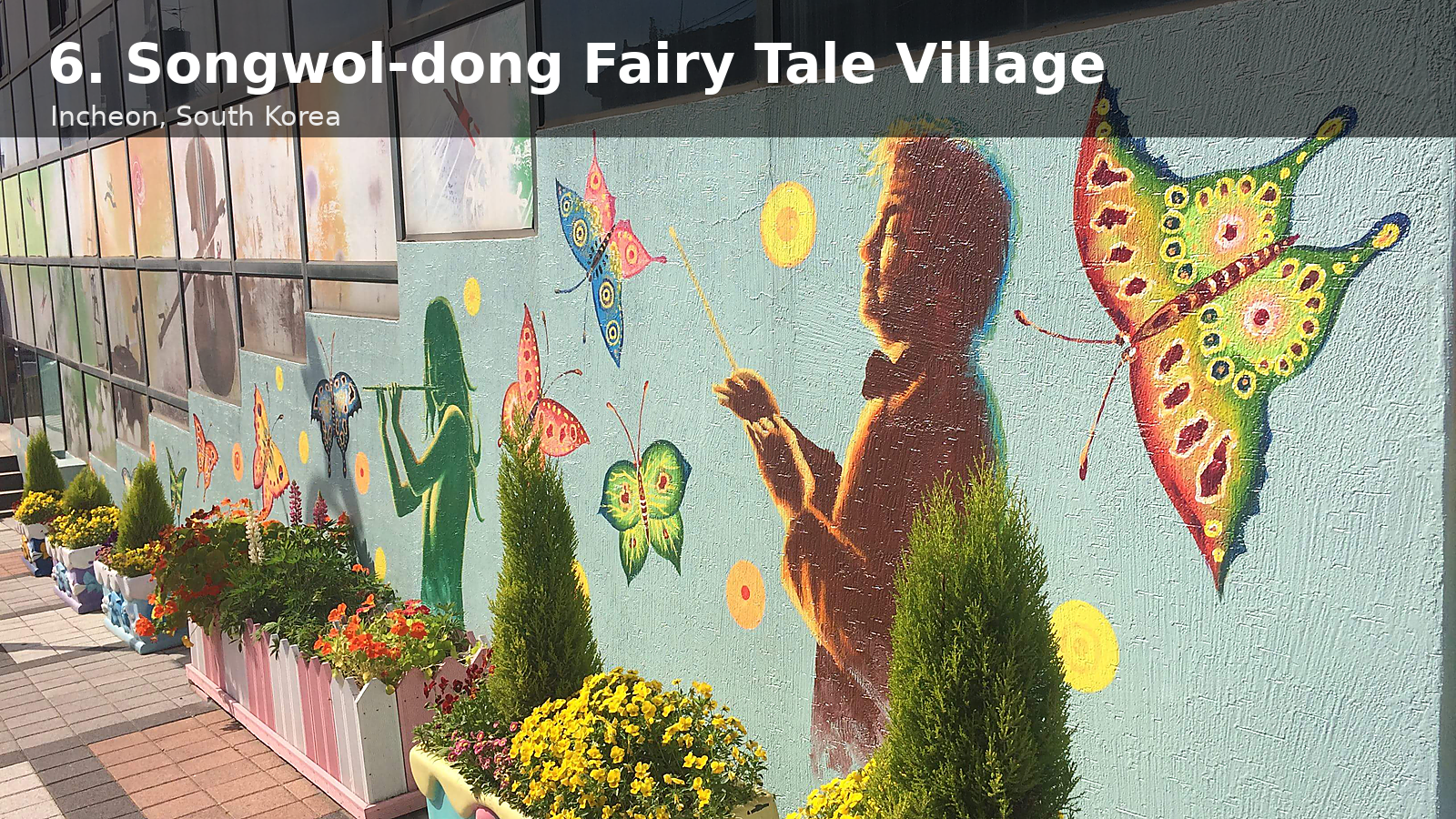
6. Songwol-dong Fairy Tale Village — Incheon’s Colorful Photo Spot
Right beside Chinatown is Songwol-dong Fairy Tale Village.
This small neighborhood offers something completely different from Incheon’s historic streets.
After the area experienced population decline, a regeneration project decorated streets and buildings with colorful murals and sculptures inspired by classic fairy tales.
Today, the neighborhood is filled with bright walls, characters and photo spots.
You do not need to spend several hours here.
I would treat it as a short stop while exploring Chinatown.
Walk through the alleys, take some photos, then continue toward Jayu Park or the Open Port Area.
The village itself is currently listed as open 24 hours with free admission, although individual cafés or businesses naturally have their own hours.
Best for: photography, families, couples, colorful streets
Recommended time: 30–60 minutes
Tip: Visit together with Chinatown. The two locations are close enough that there is little reason to make separate trips.
What Should You Eat in Incheon?
Incheon’s history as an international port had a major influence on its food culture.
Jjajangmyeon
If you only try one famous Incheon dish, make it jjajangmyeon in Chinatown.
The noodles are covered in black-bean sauce and usually served with pork and vegetables.
For two people, a good order is:
Jjajangmyeon + Jjamppong + Tangsuyuk
Share everything.
Dakgangjeong
For your second signature Incheon food, head to Sinpo International Market.
Dakgangjeong is crispy fried chicken coated in a sweet-and-spicy sauce.
It travels fairly well too, so you can buy a box and bring it to your accommodation or eat it later at Wolmido.
The market is especially known for this dish.
Jjamppong
If you enjoy spicy food, try jjamppong.
It is a spicy Korean-Chinese noodle soup usually made with seafood and vegetables.
It is a good contrast to the sweeter flavor of jjajangmyeon.
Seafood
Incheon is a coastal city, so seafood is naturally another strong choice.
Wolmido is especially convenient if you want to combine seafood with ocean views, as the waterfront is lined with cafés and seafood restaurants.
A Simple 2-Day Incheon Itinerary
Day 1 — Historic Incheon, Food & Ocean
10:00 — Incheon Chinatown
Explore the colorful streets before restaurants become too busy.
11:30 — Jjajangmyeon Lunch
Try jjajangmyeon, jjamppong and tangsuyuk.
13:00 — Songwol-dong Fairy Tale Village
Spend around 30–60 minutes taking photos.
14:00 — Incheon Open Port Area
Walk through historic streets and visit a museum if you are interested in Korean modern history.
15:30 — Jayu Park
Walk uphill for views over the city.
17:00 — Sinpo International Market
Try dakgangjeong and other street foods.
19:00 — Wolmido
Finish your day beside the ocean.
Stay for the sunset, amusement rides and night view.
Day 2 — Modern Incheon
10:00 — Songdo Central Park
Walk around the park and canal.
12:00 — Lunch in Songdo
14:00 — Café or Water Activity
Depending on the season, try a water taxi, canoe or boat.
16:00 — Slow Walk Around Songdo
There is no need to rush this day.
18:00 — Sunset at Central Park
19:00 — Songdo Night View & Dinner
This creates a nice contrast:
Day 1 = Historic & Local Incheon
Day 2 = Modern Incheon
Where Should You Stay in Incheon?
Chinatown / Incheon Station Area
This is my first choice for travelers who want:
History
Food
Traditional streets
Easy walking accessYou can reach Chinatown, Jayu Park, Songwol-dong and the Open Port Area without constantly taking taxis.
Songdo
Choose Songdo if you prefer:
Modern hotels
Clean city views
Business-class accommodation
Quiet eveningsIt is especially good for couples or travelers who have already explored older parts of Korea.
Wolmido
Choose Wolmido if your priority is:
Ocean views
Amusement rides
Families
A casual vacation atmosphere
Near Incheon International Airport
This is mainly useful for:
Late-night arrivals
Early flights
Long layoversIf you are visiting Incheon as a normal day trip from Seoul, you probably do not need to stay near the airport.
How to Get Around Incheon
For the historic area, walking + subway is usually enough.
Chinatown, Songwol-dong, Jayu Park and the Open Port Area are close enough to combine into one walking route.
Sinpo Market can also be included on the same day.
Songdo and Wolmido require more travel time, so I recommend grouping attractions geographically rather than jumping back and forth across the city.
Using a Korean transportation card such as T-money makes buses and subways easier.
You do not need a rental car for the itinerary in this guide.
Final Incheon Travel Tip
Do not treat Incheon as simply “the city where the airport is.”
The interesting part of Incheon is the contrast between its neighborhoods.
My ideal first Incheon trip would include:
Songdo Central Park for futuristic Korea
Incheon Chinatown for food and Korean-Chinese culture
Wolmido for the sea and sunset
Sinpo Market for street food
Open Port Area & Jayu Park for modern Korean history
Songwol-dong for colorful photographyIf you only have one day, I would skip Songdo and follow this route:
Chinatown → Songwol-dong → Open Port Area → Jayu Park → Sinpo Market → Wolmido
Interestingly, official VISITKOREA itineraries also group Chinatown, Songwol-dong, the Open Port historical route, Jayu Park and Sinpo Market together, which makes this a very practical sightseeing cluster.
If you have two days, add Songdo.
Incheon may never replace Seoul or Busan as a first-time visitor’s main destination, but that is exactly why it can be enjoyable.
It gives you a chance to experience a part of Korea that many international travelers simply pass through.
And if your flight already brings you through Incheon, spending an extra day here can be one of the easiest additions to your Korea itinerary.
'LifeStyle' 카테고리의 다른 글